





A rattle from the front of the engine for a few seconds on cold start, or a car that has stopped and now cranks without firing, and somebody has already put a price on a strip-down after listening to it. That price is worth questioning first. A stretched chain, a tired tensioner, a variable valve timing solenoid and an oil pickup starting to block can all behave much the same from the driver’s seat, and only one of them means opening up the front of the engine. Ashford drivers come to us in Rochester to find out which one it is before they spend anything.





A chain has no replacement interval the way a belt does. It’s designed to last the life of the engine and it gets replaced on condition, so the first thing you notice is usually a noise rather than a breakdown. From cold the oil has drained back down and the tensioner hasn’t been pressurised yet, so the slack in a worn chain is free to slap against its guides until oil pressure takes it up a few seconds later. That’s the rattle people try to describe on the phone, and it’s why it goes quiet just as you get someone to listen to it.
What shortens a chain’s life is nearly always oil: missed changes, the wrong grade, long service intervals and short journeys where the engine never gets properly warm. As the chain lengthens, the camshafts start to run behind the crankshaft, and the engine control unit sees the mismatch.
None of that proves the chain by itself. A cam sensor, its wiring, low oil pressure, a valve timing solenoid or a partly blocked oil pickup can give you the same noise, the same code and the same limp mode, and we won’t sign off stripping the front of an engine because a code reader in a car park said correlation. The diagnostic is £69. We plug into the OBD port for stored and pending codes, read the freeze-frame to see what the engine was actually doing when the fault set, watch cam and crank live data to see how far the timing has drifted from where the ECU commanded it, and check oil pressure and condition before anything comes apart.
Most diagnostics are same-day. A fault that only shows up under load or after a few miles has to be driven to be found, though, and road testing can’t be rushed into a slot. Where the repair is then booked in with us, the £69 is usually credited against it. That’s job dependent rather than automatic, it’s decided case by case on smaller jobs, and you’ll know which it is before you commit to the work.
Nothing starts without your approval. Once the fault is confirmed you get the figure and what it covers, and if you want a day to think about it, the car sits as it is. When the work’s done the timing is verified, the codes are cleared and then rechecked to make sure they stay clear, and the car goes out on the road before it comes back to you. You’ll get the handover in plain words, from the person who did the job rather than someone reading notes off a screen.
Almost all the cost of this repair is the work to reach the chain, not the chain itself, so it makes little sense to put a new one back against worn guides, a tired tensioner and sprockets with hooked teeth. A fresh chain on old hardware will stretch again faster than it should, and the second time round you pay the same labour twice. While the front of the engine is open, those parts get inspected properly and we’ll tell you what they measure. If guide material has already broken away it doesn’t stay where it fell, it goes round with the oil, so the oil side gets checked rather than assumed.

It depends on the engine and on what’s found when it’s open, and any number given before that is a guess dressed up as a quote. What drives it is how deep the chain sits and which end it’s driven from: some are behind a cover at the front and reachable in a day’s work, others sit at the gearbox end, which means separating the gearbox to get at them. Then there’s scope, whether the guides, tensioner and sprockets go with the chain, and whether the engine has already run with the timing out, because that can bring valves and oil contamination into the conversation.
You’ll have the figure and what it includes before anyone picks up a spanner, and nothing begins until you’ve agreed to it. Sometimes the honest answer is that the repair is worth more than the car, and on a high-mileage one that’s a real outcome rather than a soft no. We take older cars in that a main dealer would rather not have on the ramp, and being told not to spend the money is a legitimate result of a diagnostic.
Plenty of people searching for chain work actually have a belt, and the difference matters to the owner. A dry belt is a scheduled part with a replacement interval, and you change it on time whether it looks worn or not. A chain is meant to last, so it’s judged on condition, and what fails is usually the stretch in it and the guides and tensioner around it. A wet belt is the awkward one: it runs inside the engine in the oil, and as it degrades it sheds material that finds its way to the oil pickup, which is why it tends to take the engine with it instead of simply snapping.
Timing drive work is most of what comes through these doors, and the bulk of it is Ford, Peugeot and Citroen. That’s not the limit of what we’ll take on, it’s a consequence of one shared design: Ford’s 1.0 EcoBoost and PSA’s 1.2 PureTech both run a wet belt. We work on all makes and models, petrol, diesel, hybrid and electric, and wet belt replacement is a job we do in its own right rather than something we’ve read about.
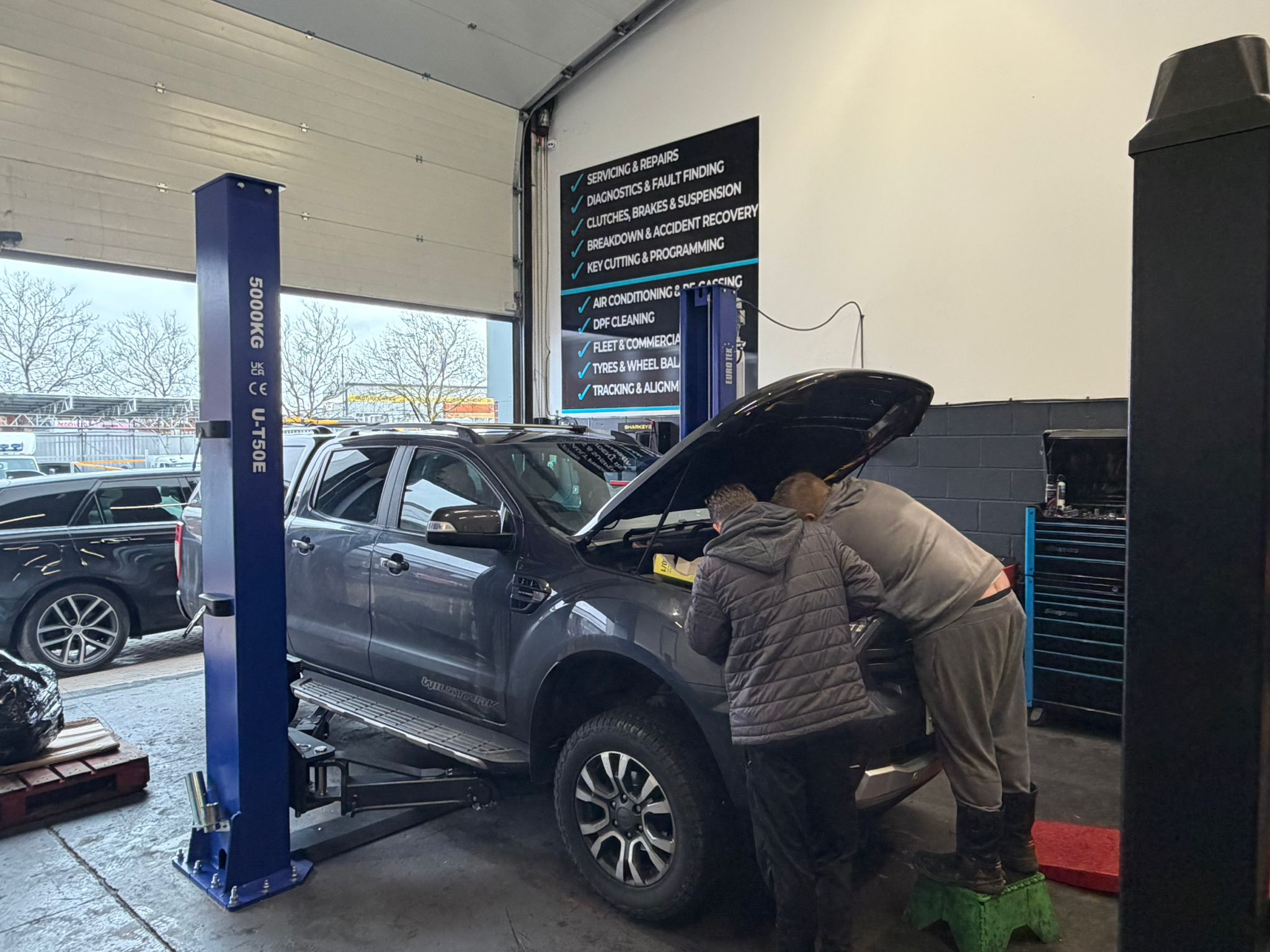
The workshop is a single unit on the Medway City Estate in Rochester, just off the A289. Most of our day-to-day work is Medway and the towns around it, Chatham, Gillingham, Rainham, Strood, Rochester itself and Gravesend, so let’s be straight about it: Ashford isn’t a patch we work in, it’s a place people travel from, usually because they’ve been quoted for a strip-down and want the fault proved before they agree to it. That’s a run out along the M20 and up the A229 for you, and it’s the reason the diagnosis comes first and the figure is agreed before anything is taken apart.
If the car won’t start, is stuck in limp mode or has been standing for months, it doesn’t have to come under its own power. We have our own recovery truck, our equipment rather than a service booked with somebody else, and we’ll bring it in. Ask when you get in touch and we’ll sort the arrangements.

Phone: 01634 510 780
Email: bookings@medwayvehicleservices.
co.uk
Unit 3 Cliffe Yard, Anthonys Way, Medway City Estate, Rochester, Kent, ME2 4DY
WhatsApp us