





Most people searching for a timing chain have already settled on the diagnosis, usually off the back of a rattle on cold start or a quote somebody else wrote. The useful question isn’t what a chain costs. It’s whether it’s the chain.
A tired cam sensor, its wiring, an oil pressure problem or a fuelling fault can all sound and behave much the same from the driver’s seat. On some very common engines the part making the noise isn’t a chain at all, it’s a belt running in oil, and that’s a different job with a different failure mode. Being wrong about which one you’ve got is expensive in a way that being checked is not.






Usually, yes, and the warning is the whole opportunity. A chain doesn’t wear to a number on a service schedule; it stretches slowly, the tensioner takes up the slack, and eventually the tensioner runs out of adjustment to give.
That’s why the noise arrives first thing in the morning. Overnight the oil drains back, the tensioner isn’t pressurised, and the slack is free to slap against the guides until oil pressure builds a few seconds after start-up. Once it’s warm the car often goes quiet again, which is exactly why people live with it for months. Alongside the noise you may get a rough or uneven idle, timing correlation codes stored in the engine control unit, or the car dropping into limp mode. None of that is a breakdown, and all of it is a warning. A chain that lets go on an interference engine stops being a timing job and becomes an engine job.
Our diagnostic is £69, and on a job this size it’s the only sensible place to start. We read stored and pending codes, look at the freeze-frame captured when the fault set, watch cam and crank signals in live data to see where the timing actually sits against where the ECU expects it, and listen to the engine from properly cold, because that’s when a worn chain gives itself away.
If the work is then booked in with us, the £69 is usually credited against the repair. It isn’t automatic on smaller jobs, it’s decided case by case, and you’ll be told which it is before you commit to anything.
Most diagnostics are same-day. Deeper fault finding isn’t, and we’d rather say so: a fault that only shows under load or after a few miles has to be driven to be found, and road testing can’t be rushed into a slot to suit a diary.
You speak to the team here directly, not a call centre and not a booking platform that picks a garage for you. That matters more on a timing job than on almost anything else, because the person authorising a four-figure engine strip ought to have had the evidence explained to them first.
So the order is fixed. The diagnosis is done, the result is explained in plain words, and the repair is only authorised once you’ve heard it and agreed. When the work is finished the timing is checked, the car goes out on the road, and you get a handover explaining what was found and what was changed.
On Ford’s 1.0 EcoBoost and PSA’s 1.2 PureTech the cambelt runs inside the engine, submerged in oil. Plenty of people who type timing chain into a search box are driving one of those, and what they’ve actually got is a wet belt.
The difference is in how it kills the engine. A wet belt doesn’t usually snap first. It sheds material as it breaks down, that debris circulates and blocks the oil pickup, and the engine is starved of oil while still running perfectly happily as far as the driver can tell. So the warning signs are different, an oil pressure light or a level that keeps dropping rather than a cold rattle alone, and the urgency is different too.
That shared design is why most of what comes through these doors is Ford, Peugeot and Citroen. It’s a consequence of one fault being common, not a limit on what we take in.

Yes. There’s no version of this that’s quick, and anyone telling you otherwise hasn’t looked at the car.
The chain, guides and tensioner sit at the front of the engine behind covers, ancillaries and usually the engine mount, so the engine has to be supported while all of that comes off to reach them. The parts themselves are not what makes the bill; the hours to get to them are. Once it’s open, the timing has to be set and then checked rather than assumed, which is the part that decides whether the engine runs properly afterwards.
Prices vary by engine and by how much of the timing drive needs replacing, so we won’t quote a number before we’ve seen the car. What you’ll get is the figure and what it covers, after the diagnosis and before any spanner goes near it.
Timing drive work is the bulk of what we do. Chains, guides, tensioners, wet belts, and engines opened up to find out why the timing components wore out early rather than simply to fit new ones. That’s a narrower diet than most general garages have, and it’s the reason a rattle on cold start gets treated as a question rather than a foregone conclusion.
We work on all makes and models, petrol, diesel, hybrid and electric, including older cars a main dealer would rather not have on the ramp. The Ford, Peugeot and Citroen concentration is about one shared design and nothing else.
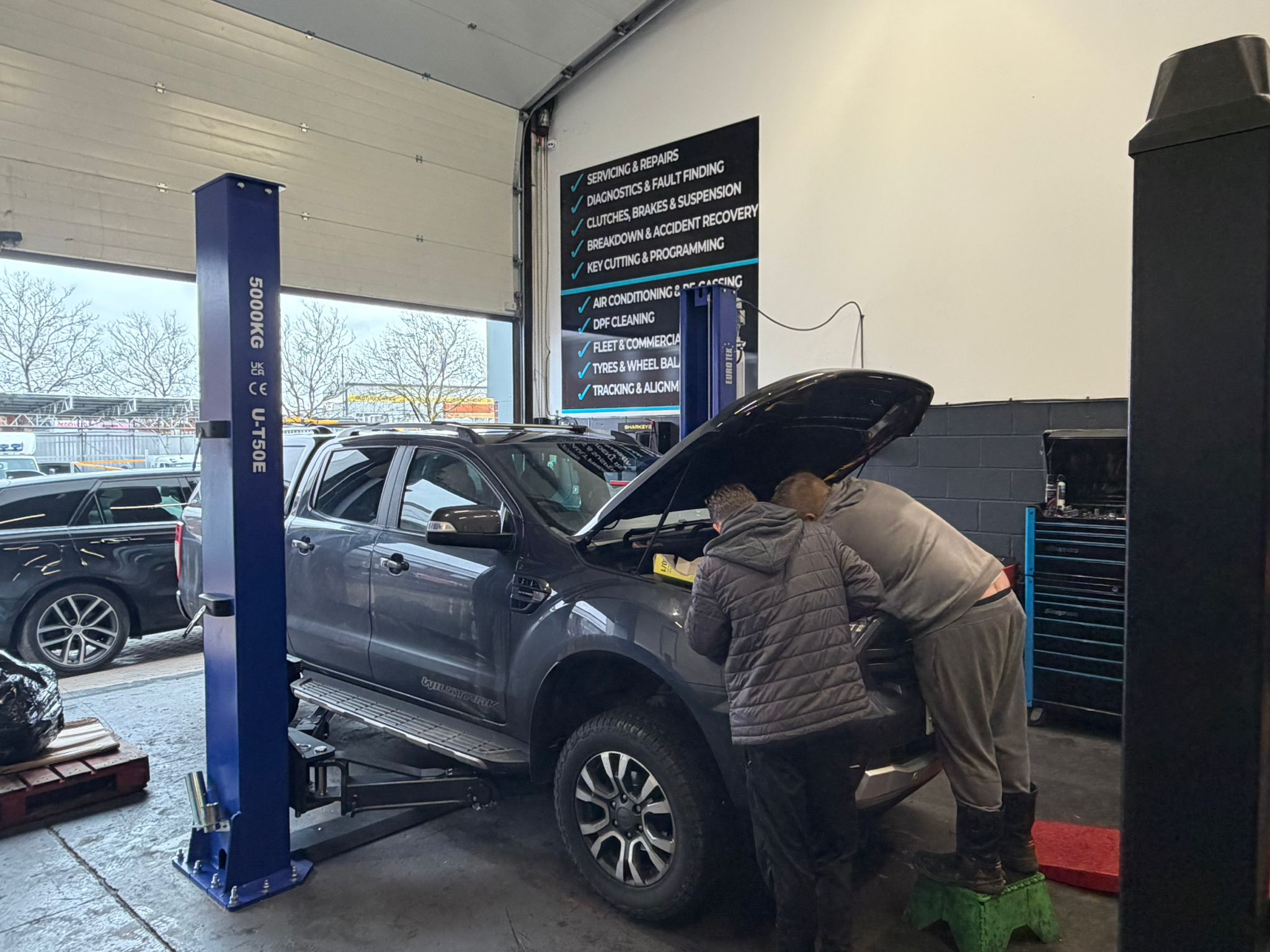
The workshop is a single unit on the Medway City Estate in Rochester, just off the A289. Day to day the bays are full of cars from Chatham, Gillingham, Rainham, Strood and Rochester itself, with a steady run of Gravesend drivers coming in as well.
Tonbridge is a drive, and we’ll be straight about that: there’s no Tonbridge premises and no local yard behind this page. Owners come up the A228 through West Malling and Snodland into Strood, or across on the M20 and over Bluebell Hill on the A229 to the M2. If the car can’t make that trip, it comes in on our truck instead. It’s our own vehicle rather than a recovery firm booked on your behalf, so a car that won’t start, sits in limp mode or has been parked up for months can still get here.

Phone: 01634 510 780
Email: bookings@medwayvehicleservices.
co.uk
Unit 3 Cliffe Yard, Anthonys Way, Medway City Estate, Rochester, Kent, ME2 4DY
WhatsApp us