





A rattle for a second or two on cold start, or an engine that won’t turn over at all, and somebody has already put a timing chain price on it without opening the bonnet. That quote is a guess with a number attached. The first spend here is a £69 engine diagnostic to establish what is actually driving the timing on your engine, because on a lot of the cars we see it isn’t a chain at all.
The £69 is usually credited against the repair when the work is booked in. It’s job dependent rather than automatic, and on smaller jobs it may not be, which we’ll make clear before you commit to anything.






Three quite different things sit behind the front cover of a modern engine, and typing “timing chain” into a search box doesn’t settle which one you’ve got. A chain runs in the oil and is built to last the engine’s life, but it doesn’t stay the same length. The pins and plates wear, the chain gains slack, the tensioner runs out of travel and the camshafts drift out of step with the crankshaft. A conventional cambelt is dry, sits behind a plastic cover and has a replacement interval you work to.
The third is the one that catches people out. A wet belt is a cambelt that runs inside the engine, in the oil, and as it ages it sheds material. That debris goes where the oil goes, and it collects at the oil pickup. Once the pickup is blocked the engine loses pressure and that’s the engine gone, not just the belt. Ford’s 1.0 EcoBoost and PSA’s 1.2 PureTech in the Peugeot 208, 2008 and 308 and the Citroen C3 and C4 all run one.
The difference isn’t academic. It’s a different part, different labour and a different bill, and on a wet belt it’s a real reason to act on a noise this week rather than listen to it for another month. We’ve written the belt versus chain comparison up properly elsewhere on the site if you want the longer version.
Usually there is a warning, and the cold start rattle is the commonest one. Overnight the oil drains back and the tensioner isn’t pressurised yet, so any slack in a worn chain is free to slap its guides until oil pressure comes up and takes it in. A couple of seconds and it’s gone. When that noise stops fading and settles in for the whole drive, the slack has gone past what the tensioner can absorb.
On a wet belt engine the warnings are different in kind. Oil level dropping, the oil pressure light, or belt debris found on a sump or in the strainer at a service. That last warning can be short, which is the honest argument for booking a noise rather than waiting to see what it does.
None of it proves anything on its own. A cam sensor, its wiring, an oil pressure fault or a fuelling problem can all produce much the same picture, and we won’t sign off a strip-down on a code somebody read out to you. The £69 diagnostic pulls stored and pending codes, reads the freeze-frame captured when the fault set, watches cam and crank signals on live data, and puts a road test behind it. Not sure what’s wrong? You don’t need to be. Describe the symptoms and we’ll take it from there.
A timing chain job varies by engine more than almost any other repair, so a single “from” figure would be honest about one car and misleading about every other one. What changes it: how the front of the engine is reached, whether the gearbox or a subframe has to come away first, whether you’re buying a chain or a chain with guides, tensioner and sprockets, whether the oil pump drive goes with it, and whether the engine has already been run with the timing out.
So instead of a number you get a sequence. The £69 diagnostic, then an itemised quote setting out the parts and the labour, then your decision. Nothing starts without your approval, and if you want to go away and think about it, the car sits as it is.
It’s a substantial one, and the reason is access rather than complexity. The front of the engine has to come apart to reach the chain, and everything has to go back with the camshafts and crankshaft locked in exactly the right relationship, so it’s careful work rather than quick work. On some engines the gearbox or a subframe sits in the way of the cover and has to be moved before anyone touches the timing at all.
What makes it bigger still is an engine that has already jumped. When the timing slips far enough, pistons meet valves, and a timing job becomes a head-off job with a valve bill behind it. That’s the real cost of waiting out a rattle. The extent is established at diagnosis and written into the quote before anything is dismantled, so you’re not finding out halfway through.

Most of our workload is Ford, Peugeot and Citroen, and there’s a reason for it that isn’t preference. The 1.0 EcoBoost and the 1.2 PureTech share the belt in oil design, so the failures arrive in numbers and we see the same job week after week. That’s a consequence of one engineering decision, not a limit on what we take in.
On the timing side specifically it’s wet belt failures, misfires where somebody has already fitted a part and not cured anything, and warning lights that come and go and were clear by the time the car reached the last garage. We work on all makes and models, petrol, diesel, hybrid and electric, including older cars a main dealer would rather not have in.
We should be straight about this: we’re not based in Herne Bay. The workshop is a single unit on the Medway City Estate in Rochester, just off the A289, and the service area is Medway, Chatham, Gillingham, Rainham, Rochester, Strood and Gravesend. Herne Bay is reached by collection, not by being round the corner.
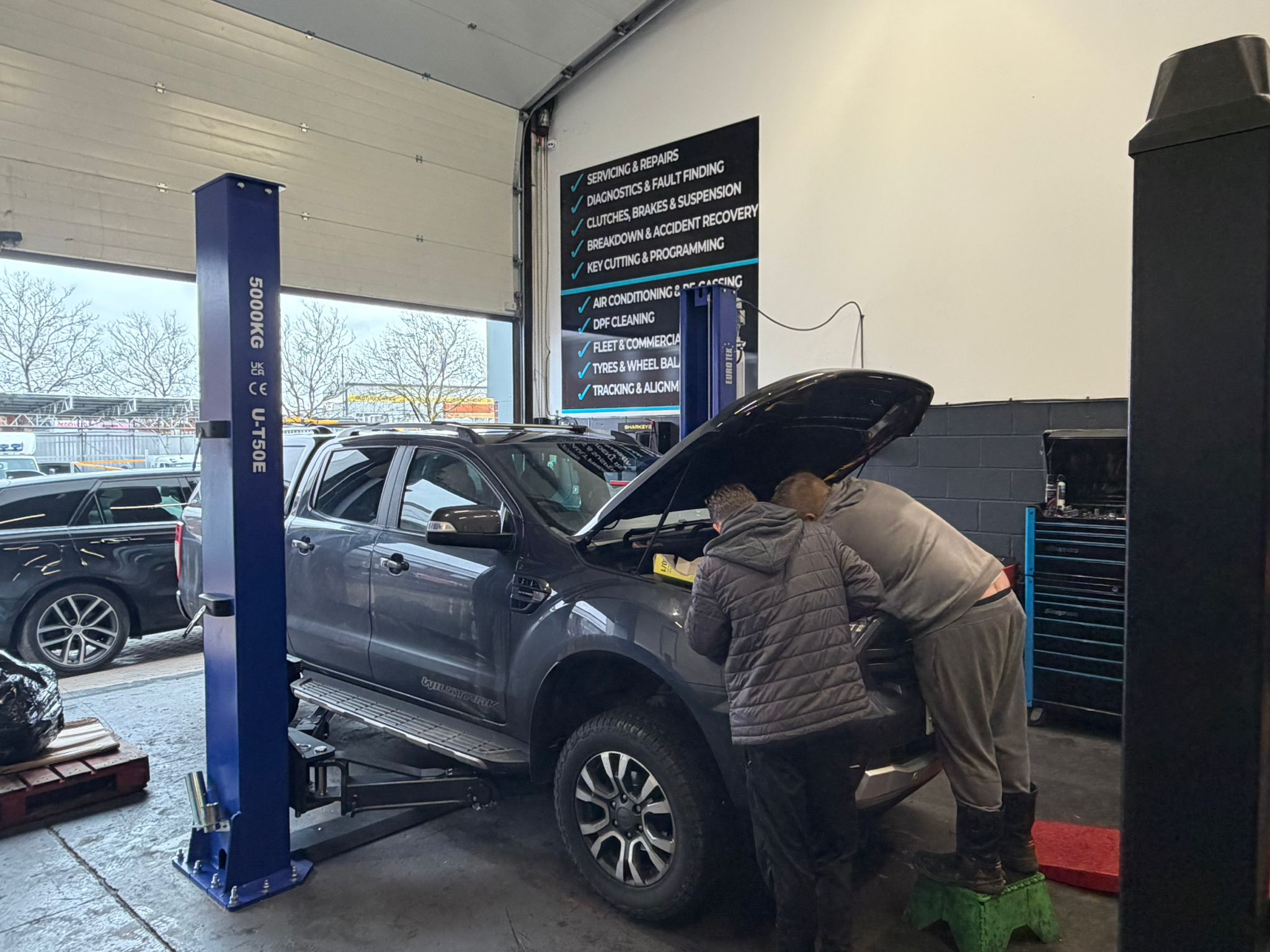
We come out on our own recovery truck. That’s equipment we own rather than a recovery firm booked in and billed on to you, and it means a car that won’t start, is stuck in limp mode or has been sitting on a drive for months is the ordinary case here rather than an awkward one. The timing work itself is done in the workshop at Rochester, on a ramp, with the engine locked properly. It isn’t a roadside job and nobody should be offering it as one.
You speak to the team directly, not a call centre and not a platform passing your details around. Whatever we find at diagnosis gets explained in plain words, with the fault codes and the live data behind it, and the quote is itemised so you can see what’s parts and what’s labour.
Every job finishes with a road test and a handover explaining what was found and what was done, so the car goes back to Herne Bay understood rather than just fixed.
We won't put a figure on it before we know the engine, because the same job on two different cars can be worlds apart depending on access, whether the gearbox has to come away and how much of the timing kit needs replacing. Any number quoted before the engine is identified is a guess. What we can tell you is what happens first: a £69 diagnostic, then an itemised quote covering parts and labour, and nothing starts until you approve it.
Usually yes. The classic one is a metallic rattle for a second or two on cold start that fades as oil pressure comes up, which is slack chain slapping its guides before the tensioner is pressurised. After that comes a rattle that stays, rough running or a misfire, cam and crank correlation codes, and limp mode. The honest caveat is that the final warning can be very short, so a noise is worth booking rather than monitoring.
By the engine, not the badge, and it's the first thing we establish. If you're driving a 1.0 EcoBoost Ford or a 1.2 PureTech Peugeot 208, 2008, 308 or Citroen C3 or C4, you almost certainly have a wet belt rather than a chain, which changes the part, the labour and the urgency. A wet belt sheds material into the oil and blocks the oil pickup, so it can take the engine with it.
Yes. We run our own recovery truck, so it's our vehicle and our driver rather than a recovery firm arranged on your behalf. A car that won't turn over, sits in limp mode or hasn't moved for months is normal work for us. It comes back to the workshop on the Medway City Estate in Rochester and the diagnosis is done there.
It's a proper job. The front of the engine has to come apart, the camshafts and crankshaft have to be locked and set exactly, and on some engines the gearbox or a subframe blocks the cover and has to be moved first. It gets considerably bigger if the timing has already jumped and bent valves, which turns it into a head-off repair. The scope is settled at diagnosis and written into the quote before anything comes apart.
Usually it's credited against the repair when you book the work in with us. It's job dependent rather than automatic, and on smaller jobs it may stand on its own, so we tell you which it is before you commit to anything. Either way you get the finding, the codes and the explanation, whether or not you have the work done here.

Phone: 01634 510 780
Email: bookings@medwayvehicleservices.
co.uk
Unit 3 Cliffe Yard, Anthonys Way, Medway City Estate, Rochester, Kent, ME2 4DY
WhatsApp us