

An MOT test typically takes between 45 and 60 minutes for a standard passenger car, giving a trained tester enough time to complete the mandatory DVSA safety and emissions checks.
Knowing the usual MOT duration helps you plan your day, avoid unnecessary waiting, and understand why some inspections take longer than others.
In this guide, we explain average test times across vehicle classes, the main factors that influence how long an MOT takes, the step-by-step process testers follow, and practical pre-MOT checks you can do to speed up your visit. It also covers retest rules and recent changes that can affect inspection time, referencing GOV.UK guidance and DVSA procedures where relevant.
What Is the Average MOT Test Time in the UK?
The average MOT test time for a standard car in the UK is around 45–60 minutes, though vans, motorcycles, and combined service visits can take longer. This period covers visual checks, functional tests, and documentation, with extra minutes added for photographic evidence or additional emissions procedures required under current DVSA rules.
Understanding this range helps set realistic expectations and reduces stress on test day; busy centres or vehicles in poor condition can push your appointment beyond an hour. Below is a quick comparison to show typical durations for different vehicle classes and key points to consider before you book.
| Vehicle class | Typical duration (minutes) | Notes |
|---|---|---|
| Car (Class 4) | 45–60 | Standard passenger cars; most common estimate |
| Van (Class 3/4) | 45–60 | Vans generally take a similar time to cars; larger or heavier vans may take longer |
| Motorcycle (Class 1/2) | 30–45 | Fewer systems to inspect; usually quicker |
| Combined service (MOT + service) | 90–180 | Adds maintenance time beyond MOT inspection |
These comparisons show how vehicle type and service scope change total appointment time and help you choose the right booking slot. For a local, timely MOT you can rely on, Medway Vehicle Services Limited offers efficient tests carried out by qualified technicians.
Standard MOT Test Duration
A standard MOT test is a single DVSA inspection of roadworthiness for cars and similar vehicles, and it typically takes 45–60 minutes. This timeframe includes checks of lights, brakes, tyres, suspension, and emissions, plus basic paperwork that results in an MOT certificate or failure notice.
Exceptions occur when inspectors must carry out extra tests, photograph evidence for certain failures, or record advisory items; older or neglected vehicles often need more time. Planning for roughly an hour per standard car appointment gives a safe buffer for most drivers and prevents tight scheduling that leads to rushed inspections.
Which Factors Affect the Duration of an MOT Test?
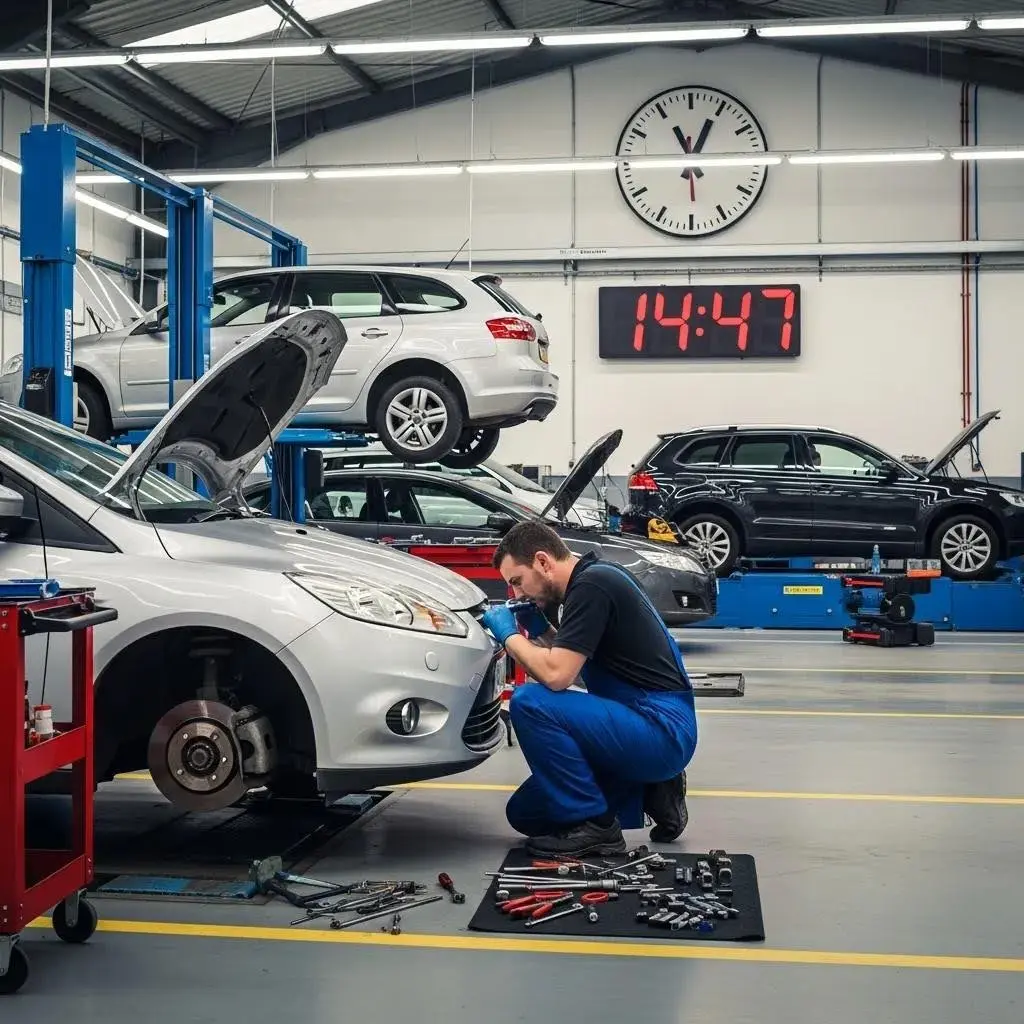
The time an MOT takes depends on several practical and administrative factors that either add or remove minutes from the appointment. Vehicle condition, centre workload, the need for photographic evidence, and additional emissions or ADAS checks under recent DVSA updates are common reasons tests take longer.
Below is a concise table that links the causes of longer tests with what you can do beforehand to help keep the inspection within the typical time range.
| Factor | How does it affect duration | What to do (customer action) |
|---|---|---|
| Vehicle condition | More defects require more inspection time | Perform basic pre-checks and fix obvious issues |
| Centre workload | Peak times increase waiting and inspection queue times | Book off-peak slots or book in advance |
| Additional testing (ADAS/emissions) | Extra measurement steps add minutes | Bring maintenance history and recharge EV systems if needed |
| Photographic evidence requirements | Documenting failures adds administrative time | Ensure clear access and an unlocked vehicle for the tester |
To clarify how those factors play out in practice, the list below summarises the main causes and short actions you can take to reduce test time and the likelihood of failure.
- Vehicle wear and tear can lengthen inspections; addressing worn components beforehand speeds the test.
- Centre staffing and high booking demand may delay the start and extend the total time; choosing quieter times helps.
- Modern systems like ADAS or EV diagnostics require calibrated checks that add minutes; inform the centre at booking.
- Required photographic evidence and paperwork add administrative steps; having documents ready simplifies processing.
These actionable steps directly reduce inspection time and the chance of a retest, which further minimizes disruption.
Vehicle Type and MOT Test Length
Vehicle type affects which systems are inspected and, therefore, how long the MOT takes: motorcycles generally take the least time because they have fewer checks, cars sit in the middle with a standard 45–60 minute estimate, and larger vans or vehicles with complex systems like ADAS or hybrid drivetrains can take longer.
Electric vehicles may require additional diagnostic checks and safe handling protocols for high-voltage systems, while vehicles with modified bodies or heavy loads may need extra inspection time. Fleet managers should factor these differences into scheduling to avoid bottlenecks and ensure each vehicle class receives the appropriate slot length.
What Happens During the MOT Test Process?
An MOT test follows a structured sequence of safety and emissions inspections designed to confirm roadworthiness; this process is why the typical 45–60 minute window exists.
Tests begin with identity and paperwork checks, proceed through functional inspections of lights, brakes, tyres, steering, and suspension, and finish with emissions and underbody inspections where applicable.
Recent DVSA requirements also include photographic evidence for certain failures and an electronic record that feeds into the MOT certificate outcome. The numbered list below outlines the core sequence so you can see where time is allocated during a standard appointment.
- Document and identity checks: Verifying registration details and previous MOT history to set the administrative baseline.
- Exterior checks: Inspecting lights, number plates, mirrors, and bodywork for legality and condition.
- Underbody and suspension checks: Lifting the vehicle to inspect the chassis, suspension, and exhaust for faults.
- Brakes and tyres inspection: Measuring tread depth and brake performance for safety compliance.
- Emissions test and engine checks: Running emissions measurements and basic engine diagnostics where needed.
- Final review and paperwork: Recording results, photographic evidence if required, and issuing the MOT certificate or failure notice.
Key Steps in an MOT Test
Each key step in an MOT test has a clear purpose: to confirm legal compliance and safety through measurable checks and recorded outcomes.
Testers inspect lights and signalling to prevent visibility and communication failures, assess tyres and brakes to verify stopping performance, and check emissions to meet environmental standards; together, these steps reduce road risk.
Photographic evidence and detailed notes help protect both the tester and owner if disputes arise, while advisory notices identify items to address that do not cause immediate failure. Understanding these steps helps you prepare and anticipate where small pre-repairs could save time and avoid a failed test.
How Can You Prepare to Help Ensure a Quick and Efficient MOT Test?
Preparing your vehicle before the appointment reduces inspection duration and the likelihood of failing because of easily fixable items, which in turn avoids retests and extra visits.
Simple pre-check routines like testing all lights, verifying tyre tread and pressure, topping up screenwash and checking wipers, and clearing loose items from the cabin and boot make the tester’s job faster. The table below lists practical checks, what to inspect, and a rough estimate of the time saved when each task is completed beforehand.
| Check | What to check | Time saved (approx.) |
|---|---|---|
| Lights | All bulbs, indicators, and brake lights function | 5–10 minutes |
| Tyres | Tread depth above legal limit; correct pressure | 5–15 minutes |
| Wipers & screenwash | Wiper blades and fluid level | 2–5 minutes |
| Oil & coolant | Visible levels and no warning lights | 5–10 minutes |
| Documents & keys | V5C or registration details and spare key | 5 minutes |
A practical checklist summarises the quickest actions drivers can perform before arrival to help the tester work efficiently and keep the appointment within the usual time window.
- Check all exterior and dashboard lights the evening before your MOT to avoid immediate failures.
- Measure tyre tread and inflate to the manufacturer’s recommended pressure for even wear and correct readings.
- Top up screenwash and ensure wipers are not perished to prevent visibility advisories.
- Bring your vehicle documents and ensure the vehicle is accessible and unlocked for the tester.
- Note any warning lights and mention recent repairs when you arrive so the tester can focus checks appropriately.
These steps typically shave minutes off the inspection and reduce the odds of a failure requiring a retest. Alongside this preparation, Medway Vehicle Services Limited can offer pre-MOT checks and advice to help you reduce test time, with qualified technicians available to inspect and advise on minor fixes before your booked MOT.
Pre-MOT Checks That Speed Up the Test
Performing a short list of pre-MOT checks yourself prevents common failures and shortens the time the tester needs to spend on obvious issues. Inspect bulbs and indicators, measure tyre tread and pressure, confirm fluid levels and wiper condition, and clear the vehicle of loose items that hinder access to inspection points.
For fleet managers, a standardised quick-check sheet completed before arrival can save significant time overall across many vehicles. Bringing keys, documentation, and a short note of recent repairs also speeds administrative steps and helps the tester concentrate on technical inspections.
For bookings or to arrange a pre-MOT check with an experienced local provider, contact Medway Vehicle Services Limited to enquire about available MOT slots and pre-inspection assistance.
Frequently Asked Questions
How Long Does A MOT Test Take In The UK?
For most standard cars, expect 45–60 minutes. Motorcycles are usually quicker (30–45 minutes). If you book an MOT + service, the total visit often jumps to 90–180 minutes.
Why Can An MOT Take Longer Than An Hour?
The main time-drains are vehicle condition (more defects = more time), busy test centres, extra ADAS/emissions-related steps, and photo evidence/admin requirements that add paperwork time.
What Happens During The MOT Test (Step-By-Step)?
The tester typically starts with document/identity checks, then moves through exterior checks, underbody/suspension inspection, brakes and tyres, emissions/engine checks, and finishes with recording results + paperwork (including photos where required).
How Can I Prepare To Make The Mot Faster And Avoid Simple Failures?
Do the easy stuff before you arrive: check all lights, tyre tread/pressure, wipers + screenwash, oil/coolant + warning lights, and bring documents/keys. Also, make sure the car is clear/unlocked and mention any warning lights or recent repairs.
