





A metallic rattle for the first few seconds after a cold start, or a car that turned over once and then went quiet, and a strong suspicion that this is the expensive one. That’s usually why people land on a page like this.
Here’s the honest position. A timing chain can’t be priced from a make, model and registration, and the first thing worth settling isn’t the cost at all, it’s whether your engine even has a chain. A good number of the cars that reach us with “timing chain” in the enquiry turn out to be running a cambelt in oil, which is a different job with a different bill.




A chain has no service interval. It gets replaced on condition, and that condition creeps up slowly, so the first thing an owner notices is nearly always a noise rather than a breakdown.
From cold, oil has drained back down into the sump and the hydraulic tensioner hasn’t been pressurised yet. Until it is, the slack in a worn chain has nowhere to go and slaps against its plastic guides, which is the few seconds of rattle that disappears once oil pressure comes up. As the link pins and rollers wear, the chain effectively gets longer, the camshafts drift out of step with the crankshaft, and the engine control unit sees the mismatch and stores a correlation fault.
None of that proves the chain on its own. A timing correlation code names a discrepancy, not a cause: a stretched chain will produce it, but so will a failed tensioner, a cam sensor or its wiring, or an oil supply that isn’t getting to the tensioner in the first place. Replacing a chain because a code said “timing” is how people spend a lot of money and still have the fault.
Our diagnostic is £69. We read stored and pending codes, look at the freeze-frame data captured when the fault set, watch the cam and crank signals in live data, listen to the engine from genuinely cold, and check tensioner and guide wear where it can be reached. That £69 is usually credited against the repair when the work is booked in, though it’s job dependent and not automatic on smaller jobs. Whichever way it falls, you’ll know before you commit to anything.
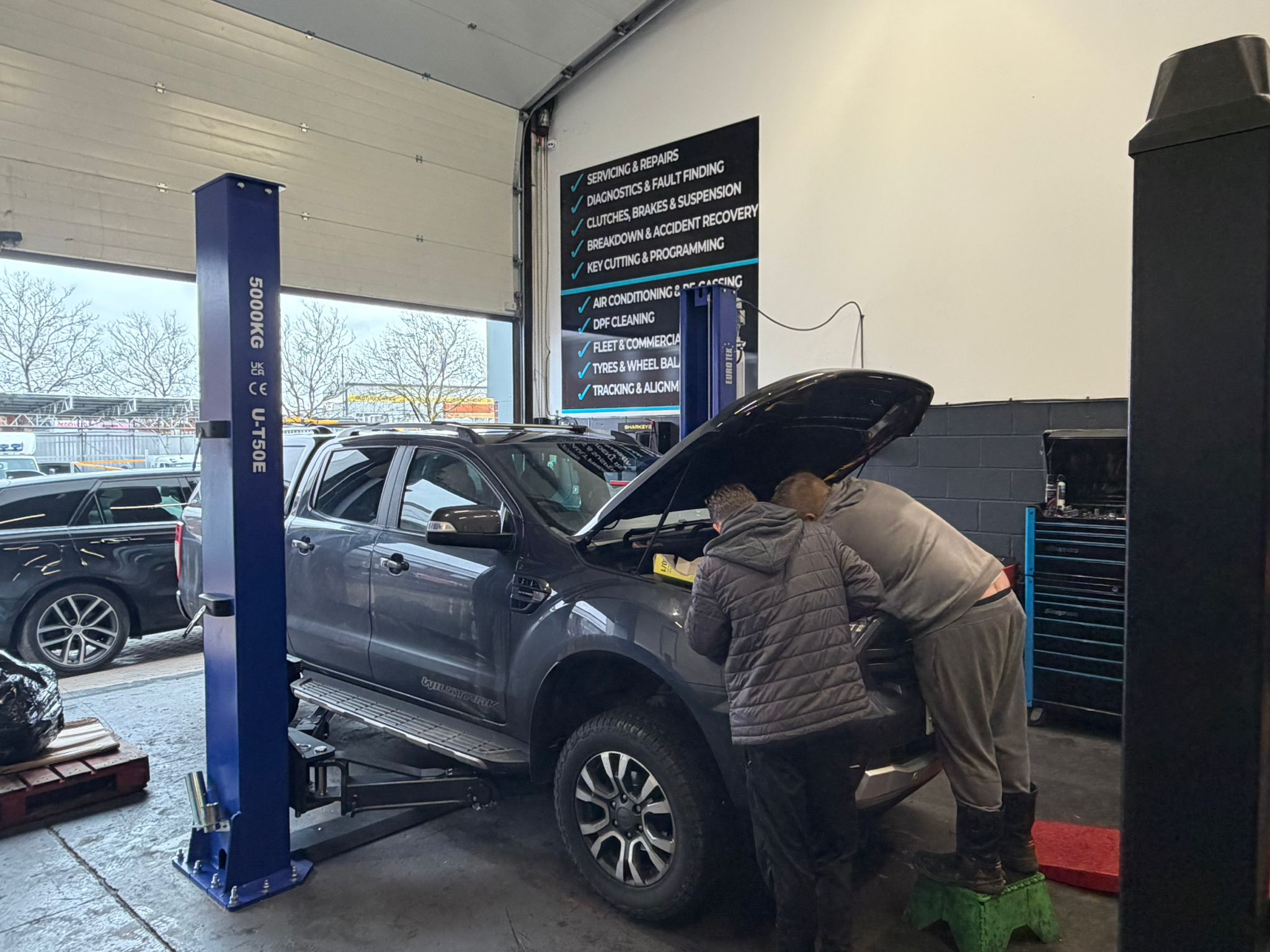
It’s a big job, and anyone telling you otherwise hasn’t done one. The front of the engine has to come apart to reach the chain, the cover comes off, and then the timing has to be set and verified rather than assumed, because a tooth out is an engine that runs badly at best. Afterwards it’s run, the codes are cleared and rechecked to be sure they stay clear, and the car goes out on the road before it comes back to you.
That makes it a workshop job occupying a bench, not a slot. It’s also why it can’t be done on a driveway, whatever a booking platform’s “at home or at work” wording suggests. Nothing begins until you’ve had the figure and approved it.
Most diagnostics are same day. Deeper fault-finding isn’t, because a fault that only shows under load or after a few miles has to be driven to be found, and road testing can’t be rushed into a slot. A rattle that only appears warm is exactly that kind of fault.
Three systems, three jobs, three very different bills, and the names get used interchangeably by people who should know better.
A chain runs inside the engine and is lubricated by engine oil. It’s meant to last the life of the engine, so it fails by wearing and stretching, with a rattle and a timing fault, rather than by reaching an interval. A dry belt is a rubber belt behind a cover on the outside of the engine, changed by age and mileage, and left too long it snaps without warning. A belt in oil, or wet belt, is a cambelt that runs inside the engine bathed in oil, as on Ford’s 1.0 EcoBoost and PSA’s 1.2 PureTech. Those degrade from the inside out and shed material that finds its way to the oil pickup, which starves the engine of pressure and does far more damage than the belt itself. If you drive a Fiesta, a Puma, a 208 or a C3 and you’ve been searching for chain prices, this is very likely the job you’re actually pricing.
The number doesn’t exist until somebody has looked at the car, and any figure offered before that is a guess dressed up as a quote.
There are real reasons for that. A chain comes as a kit rather than a part, so chain, guides, tensioner and sprockets all sit in the scope, and what goes on depends on what the old parts measure once the engine is open. Access varies enormously too: some engines are reached from the front, others need the engine out or the gearbox off, and the labour to reach the chain is most of the cost. A chain that’s been rattling for months may also have taken the cam timing and the oil pump with it, and that gets checked rather than assumed.
Two figures are fixed. The diagnostic is £69, and the wet belt job starts at £599+VAT, which is the belt-in-oil price and not a chain price. For the chain itself you get the figure and what it covers after the inspection, and nothing starts until you’ve said yes.
Sometimes the honest answer is don’t. On an older or high-mileage car the repair can cost more than the car is worth, and being told to walk away is a legitimate outcome of a diagnostic rather than a failed one. Our sister business, We Buy Broken Fords, is where a fair few people go when the sums don’t work.
The person who quotes the job is the person who strips the engine. You speak to the team directly rather than a call centre, the diagnosis gets explained in plain words before anything comes apart, and the car is handed back after a road test with an explanation of what was done and what was found.
Our workload runs heavily to Fords, Peugeots and Citroens, and there’s a reason for it: the 1.0 EcoBoost and the 1.2 PureTech share a wet belt design that fails in the same way, so that work keeps coming through the door. It’s a consequence of one fault, not a limit on what we take. All makes are welcome, petrol, diesel, hybrid and electric, including older cars a main dealer would rather not have in.
The workshop is a single unit on the Medway City Estate in Rochester, just off the A289, so we won’t pretend we’re round the corner from Canterbury. It’s the A2 out of the city to Brenley Corner, then the M2 west and off at Medway, and drivers choose to come that way from across Kent because the diagnosis comes first and the figure is agreed before anyone starts.
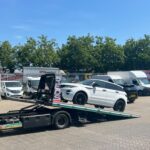
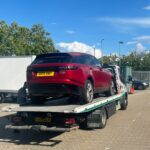
If the car can’t be driven, we collect it on our own recovery truck, which is equipment we own rather than a service we arrange through somebody else. That covers a car that won’t start, one stuck in limp mode, and one that’s been parked for months. Worth knowing: on an interference engine a snapped chain can let the valves meet the pistons, so repeated cranking to see if it’ll catch does more harm than good. Leave it and let us bring it in.
We don't publish a chain price, because the cost depends on the kit fitted and how the engine is reached, and those aren't known from a registration. What is fixed is the £69 diagnostic. After that you get the figure for your car, in writing terms you can understand, and the decision stays with you.
Tell us the engine and we'll tell you before you book anything. It matters most on small modern petrols: a 1.0 EcoBoost Ford or a 1.2 PureTech Peugeot or Citroen has a belt running in oil, not a chain, even though the noises and the warning lights can look similar from the driver's seat.
No. The front of the engine has to come apart and the timing has to be set and verified with the car held in a controlled position, which needs a bench, lifting gear and tools that don't travel. Booking platforms offering work at home or at the office aren't offering this job.
Yes, and the size of it is labour rather than parts. Getting to the chain means stripping the front of the engine, and the reassembly has to be verified, run and road tested afterwards. The car stays with us for that, so plan for it being off the road rather than in and out of a slot.
Don't keep cranking it, and don't arrange recovery yourself. We'll come and fetch it on our own truck, whether it's on a driveway, at the roadside or sitting at another garage, and it comes straight to the workshop to be looked at.
Sometimes it isn't worth it, and we'll say so. Once we know what's wrong and what the repair involves, you can weigh it against what the car is worth as it stands. If the answer is to sell it rather than fix it, our sister business We Buy Broken Fords is the usual route people take.

Phone: 01634 510 780
Email: bookings@medwayvehicleservices.
co.uk
Unit 3 Cliffe Yard, Anthonys Way, Medway City Estate, Rochester, Kent, ME2 4DY
WhatsApp us