





A metallic rattle for a few seconds on cold start, or an engine that turns over once and stops, and somebody has already put a four-figure number on it without taking anything apart. Before a chain is quoted, somebody has to establish it’s a chain at all, and on the engines we’re brought most often it usually isn’t.
Ford’s 1.0 EcoBoost and PSA’s 1.2 PureTech don’t have a timing chain. They run a belt in oil, which fails in a different way and is a different repair with a different price. Our diagnostic is £69 and it settles which of the two jobs you’ve actually got. The workshop is at Rochester on the Medway City Estate, a short run east from Gravesend on the A2.





A timing chain runs in oil by design and is meant to last the life of the engine, so there’s no interval to work to. It fails by wearing. The chain lengthens, the guides and tensioners wear with it, and the camshafts drift out of step with the crankshaft until the ECU sees the mismatch and stores a timing correlation fault. The noise comes first, usually from cold, before oil pressure has taken the slack up.
A wet belt is a different part doing the same job. It’s a rubber cambelt that also runs in the oil, but it’s designed to be replaced, and as it ages and heats it sheds material into the sump. That debris blocks the oil pickup, and it’s the oil starvation that finishes the engine rather than the belt breaking. Ford’s 1.0 EcoBoost and the 1.2 PureTech across the Peugeot and Citroen range both work this way.
So a driver who searched for a timing chain because a 1.0 EcoBoost rattles from cold is, more often than not, looking at a wet belt job instead.
None of that proves a chain on its own. A cam sensor, its wiring, low oil pressure or a fuelling fault give much the same picture, and nobody should be committing you to a strip-down off a code somebody read out in a car park. The diagnostic is £69. We pull stored and pending codes including timing correlation, read freeze-frame and live data, listen to the engine from cold and inspect what’s driving the noise, so the answer isn’t only chain or belt but whether it’s the chain itself or the tensioners, guides and sprockets around it.
It’s usually credited against the repair when the work is booked in with us. That’s job dependent rather than automatic on smaller jobs, and it’s made clear before anyone commits either way. Most diagnostics are same-day. A fault that only shows under load or after a few miles has to be driven to be found, and road testing can’t be rushed into a slot.
You get the diagnosis, the figure and what it covers, and the work begins when you say so. If you want a day to think, the car sits as it is. When the job’s done the timing is verified, the codes are cleared and rechecked to be sure they stay clear, and the car goes out on a road test before it comes back to you. We explain what was worn and why in plain words, and you speak to the team here directly rather than a call centre.
The front of the engine has to come apart: ancillaries, belts and covers off, and depending on the engine the sump or the gearbox has to come away as well to reach the drive. The engine is locked at top dead centre with proper timing tools and re-timed on reassembly, because a tooth out is a bent valve and a far bigger bill than the one you started with.
Scope is settled with it open. Guides, tensioners and sprockets get measured rather than replaced as a matter of course. If they’re good, you don’t buy them. If they’re worn, changing them while everything is already apart is the sensible call, because nearly all of what you pay is the labour to get in there, and paying that twice is the expensive outcome.
Four things move the figure: whether it’s a chain or a belt in oil, whether the kit is chain and tensioners or guides and sprockets too, whether the drive is reached from the front of the engine or only with the sump or gearbox off, and whether the engine has already been damaged by running out of time. Any one of those changes the number, which is why it’s committed after the inspection and not before.
If you’ve priced this at a fast-fit branch or through a booking site, be clear what’s being quoted. Fast-fit bays are set up for tyres, brakes and servicing, not engine timing work, and a booking layer hands the job to an unnamed garage on a range guessed before anyone has looked at your car. The one timing figure we publish is the wet belt job, from £599+VAT, and that’s a different repair. Pricing is upfront with no hidden extras, and nothing starts without your approval.
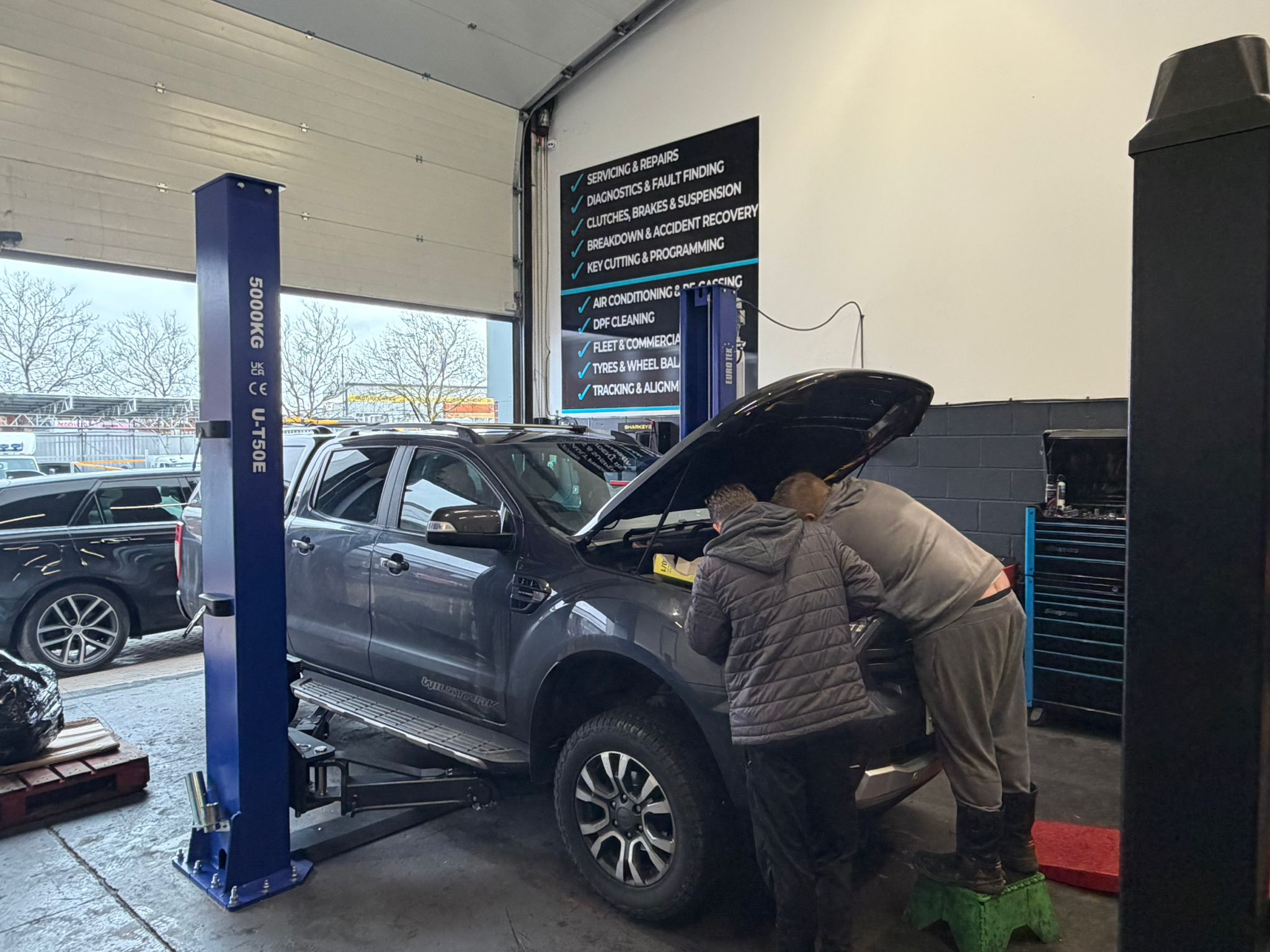
Timing drive work is most of what comes through these doors: wet belts, chains, guides, tensioners, and engines opened up to find out why they wore out early rather than simply to fit new parts. The workload leans Ford, Peugeot and Citroen because of that shared wet belt design, not because other makes are turned away. All makes are taken, petrol, diesel, hybrid and electric, including older cars a main dealer would rather not have in.
It also means the verdict can go against the repair. On a high-mileage car worth less than the bill, being told to keep your money is a legitimate result of a diagnostic, not a failed one, and you’ll get it straight.
The workshop is a single unit on the Medway City Estate at Rochester, just off the A289. From Gravesend it’s a short run east on the A2 and then in on the A289, and Gravesend drivers choose to come to us rather than us claiming to be round the corner from them.
If it won’t turn over, leave it where it is. A bad rattle, a sudden loss of power or a stored timing code all mean the next few miles can turn a repair into an engine, so don’t keep driving it to see if it clears. The recovery truck is ours, owned rather than arranged through somebody else, and it brings in cars that won’t start, sit in limp mode, or have been parked for months. Tell us where the car is and what it’s doing and we’ll sort the collection with you.

Phone: 01634 510 780
Email: bookings@medwayvehicleservices.
co.uk
Unit 3 Cliffe Yard, Anthonys Way, Medway City Estate, Rochester, Kent, ME2 4DY
WhatsApp us