





A metallic rattle for the first few seconds after a cold start, or a car that turned over once and then refused to run, and nobody willing to put a number on what comes next. That’s what usually brings people here, often with a warning already given that the engine is finished.
The workshop is on the Medway City Estate in Rochester. Sheerness and Sheppey drivers come over the bridge to us, and if the car won’t start or has been standing for months, we have our own recovery truck and can bring it in. What we won’t do is take the front of an engine apart because somebody heard a noise and guessed at a chain.




Usually, but not always. A chain stretches slowly rather than failing on a given date, so the first sign is nearly always a sound. Overnight the oil drains back out of the tensioner, and until pressure builds again the slack in a worn chain is free to slap against its guides. That’s the few seconds of chatter from cold that owners learn to live with, and it’s the stage where the job is still a chain job.
As the chain lengthens, the noise comes back sooner and lasts longer, and valve timing starts to drift far enough that the engine control unit notices. From there the symptoms move from noise to running.
None of that proves the chain on its own. A tensioner or a guide can let a perfectly serviceable chain go slack, low oil pressure can starve the tensioner so it never takes the slack up, and a sensor, its wiring or a fuelling fault can produce a very similar picture with the timing gear untouched. A stored code naming the camshaft to crankshaft relationship tells you the timing is out. It doesn’t tell you why.
So the noise gets diagnosed first. Our diagnostic is £69. We read stored and pending codes at the OBD port, look at the freeze-frame captured when the fault set, watch cam and crank signals in live data, and road test the car, because a rattle that only shows under load or after a few miles will never appear standing at idle in the workshop.
If the chain has already jumped, the honest warning is this: carrying on driving it is what turns a chain job into an engine job.
Yes, and it’s worth knowing what makes it big rather than taking the word for it. The front of the engine has to come apart, ancillaries and covers off, the timing locked and set so the camshafts and crankshaft go back exactly where they belong. On plenty of engines the lower end of the chain can’t be reached without dropping the sump, and on some the gearbox has to come away first. Almost all of the cost is the labour of getting to a part that is itself fairly cheap.
Nothing starts without your approval. The job finishes with a road test, and you get the handover in plain words: what was found, what was replaced and what we saw while the engine was open.
The parts are normally supplied as a kit rather than a chain on its own, and there’s a reason for that. A chain wears against its guides, so by the time it has stretched, the plastic it has been running on is grooved and the tensioner has been sitting at the end of its travel for a while. Fit a new chain to those and you buy a short reprieve at full labour cost.
Sprockets get looked at the same way, and if guide material has broken away it doesn’t stay where it fell, it goes round with the oil, so the oil side gets checked rather than assumed. Whatever is needed is listed on the quote before it’s fitted.
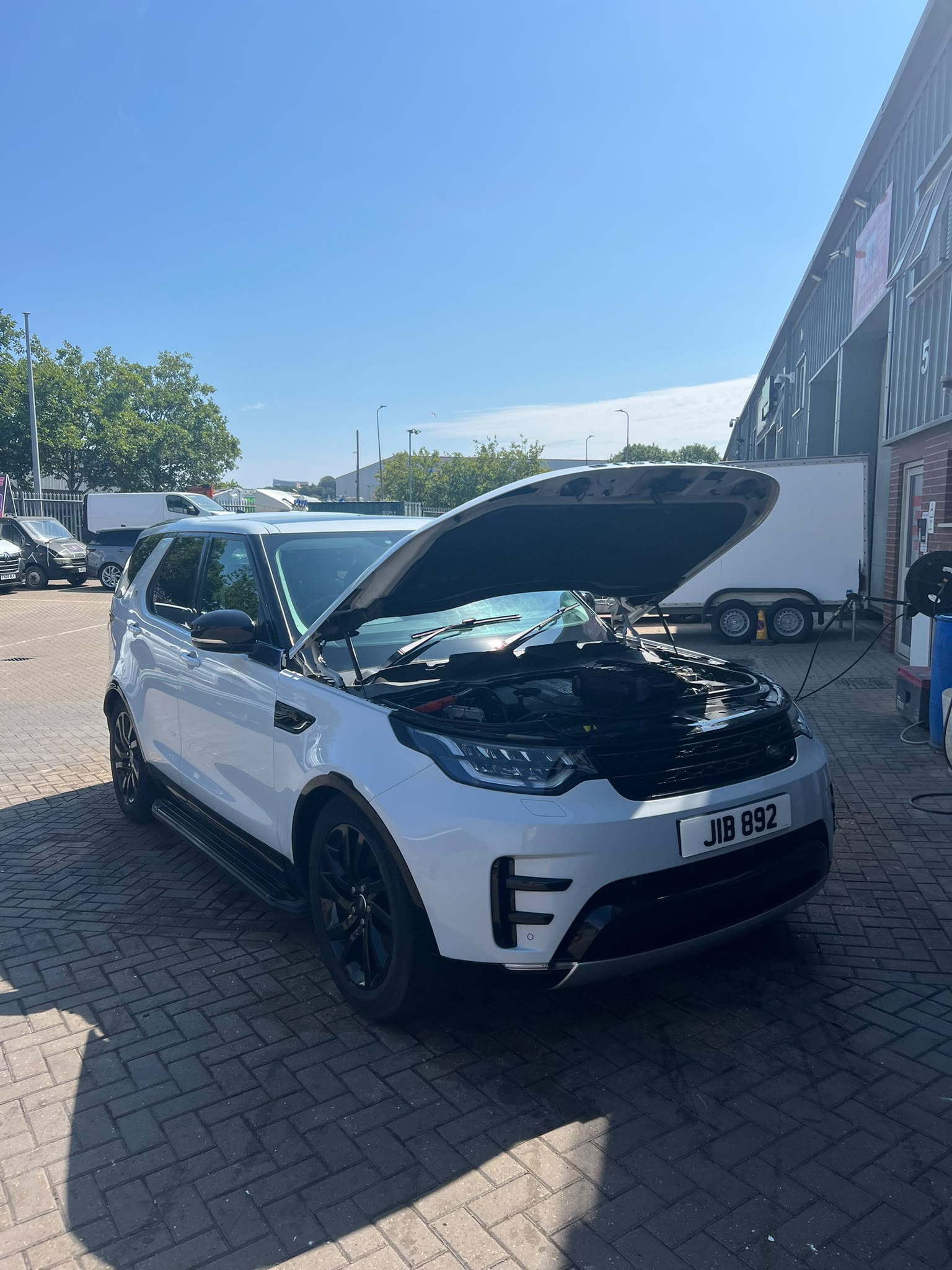
Because a single figure covering every chain job would be a guess with a pound sign in front of it. What the work costs depends on how the front of that particular engine comes apart, whether the sump or gearbox has to come off to reach the lower end, whether guides, tensioner, sprockets, an oil pump drive or the water pump go with it, and whether the chain has already jumped and a valve has met a piston.
What we can give you is the £69 diagnostic, then an itemised quote with parts and labour listed separately, and nothing begun until you’ve agreed to it. The diagnostic charge is usually credited against the repair when the work is booked in. It’s job dependent and not automatic on smaller jobs, and you’ll be told which it is before you commit to anything.
People also ask what a fast-fit chain would cost. We won’t invent another firm’s prices, but a timing chain is engine work, not a fitting-bay job.
A good share of people searching for timing chain work don’t have a chain. Ford’s 1.0 EcoBoost and PSA’s 1.2 PureTech run a cambelt inside the engine, sitting in the oil. If you’re in a Fiesta, Focus or Puma, or a 208, 2008, 308, C3 or C4, that’s almost certainly what’s fitted.
It matters because the failure is different. As a wet belt ages it sheds material into the oil, the debris finds the oil pickup and blocks it, and what you’re then dealing with is an engine rather than a belt. The parts, the strip and the risk all differ from a chain job, so a quote for a timing chain on one of these engines means nobody has established what’s in the car. We cover wet belt work and what it costs separately, because none of the pricing on a belt-in-oil job carries over to a chain.
The workshop is on the Medway City Estate in Rochester, just off the A289. We’re not going to dress Sheerness up as being round the corner. Drivers from Sheerness, Queenborough, Minster, Halfway and Eastchurch come over the Sheppey Crossing and down the A249 into Medway because they’ve decided the work is worth the trip, and that’s a choice they make rather than an area we claim by proximity.
If the car can’t be driven, it doesn’t need to be. The recovery truck is ours, not a service we arrange, and it will go out for a car that cranks and won’t run, one sitting in limp mode, or one that’s been parked on a driveway for months. The diagnosis happens here and the figure is agreed before anyone picks up a spanner.
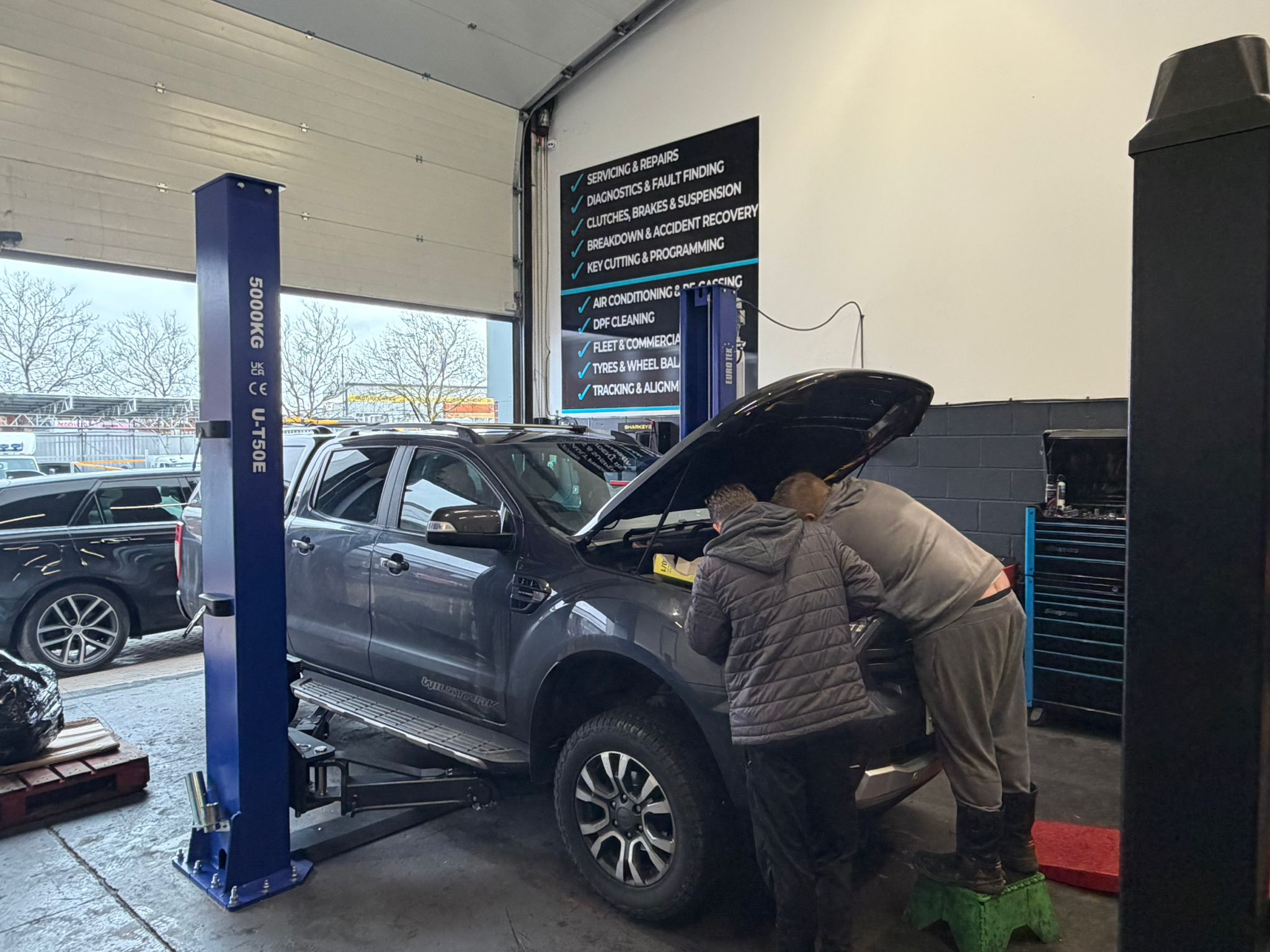
No, and anyone offering it hasn't thought it through. The car has to be secured, the front of the engine stripped, and the timing locked and set with everything kept clean, which isn't happening on a driveway or at a kerb. The useful half of the answer is that you don't need to get it to us yourself. If it won't start or has already stopped in Sheerness, our own recovery truck brings it in.
Usually, yes. When the work is booked in, the diagnostic charge is normally credited against the repair. It's job dependent and it isn't automatic on smaller jobs, so it's decided case by case and made clear to you before you commit to anything. We'd rather say that plainly than publish a rule we'd have to wriggle out of later.
Most diagnostics are same-day. Deeper fault finding isn't, and a chain rattle is often exactly that sort of job, because a noise that only turns up under load or after a few miles has to be driven to be found and road testing can't be squeezed into a slot. We'll tell you which of the two we think yours is when you call.
No. The 1.0 EcoBoost runs a wet belt, a cambelt inside the engine sitting in the oil, as does PSA's 1.2 PureTech. It's a different job with different parts and a different risk, since a degrading belt sheds material that blocks the oil pickup. If you've been quoted for a timing chain on one, ask what they actually looked at.
Yes. We work on all makes, petrol, diesel, hybrid and electric, including older cars a main dealer would rather not have on the ramp. The honest part is that a diagnostic can end with the repair costing more than the car is worth, and being told not to spend the money is a legitimate result rather than a wasted visit.
They do, over the crossing and down the A249. The reasons they give are usually the same: the call goes to the team here rather than a call centre, the person who quotes the job is the person who'll have the front of your engine apart, and the quote is itemised with parts and labour shown separately before anything is started.

Phone: 01634 510 780
Email: bookings@medwayvehicleservices.
co.uk
Unit 3 Cliffe Yard, Anthonys Way, Medway City Estate, Rochester, Kent, ME2 4DY
WhatsApp us