





Either there’s a rattle for a second or two when the engine’s cold, or a garage has already said the words timing chain and quoted a figure that ended the conversation. Before anyone quotes you to replace a chain, we confirm the chain is what’s actually wrong. A stretched chain has a signature: the camshafts stop arriving where the engine control unit expects them relative to the crankshaft, and that shows up as a correlation fault rather than as somebody’s opinion. We’re a workshop on the Medway City Estate in Rochester, so Sittingbourne cars either drive to us or we fetch them on our own truck.






There’s no mileage interval for a chain. It gets replaced on condition, and the condition creeps, so the first sign is nearly always a noise rather than a breakdown.
Overnight the oil drains back out of the top of the engine. On a cold start the tensioner hasn’t been pressurised yet, so slack in a worn chain is free to slap against its plastic guides until oil pressure takes it up, and that’s the rattle that fades after a couple of seconds. As the chain stretches further the tensioner runs out of travel, the guides wear grooves where the chain has been running on them, and the cam timing drifts against the crank. That’s the point where the running goes rough and the light comes on.
None of that proves the chain. A worn tensioner, low oil pressure holding a tensioner off its stop, or a noisy ancillary all make much the same noise, and a correlation code can just as easily be a cam sensor, its wiring or a fuelling fault. We won’t book a four-figure strip-down off a code somebody read out in a car park.
Our diagnostic is £69. We pull stored and pending codes, read the freeze-frame captured at the moment the fault set, watch the cam and crank signals live, and hear the engine ourselves from cold. That’s reading a fault rather than reading a code. The £69 is usually credited against the repair when the work’s booked in, though it’s job dependent and not automatic on smaller jobs, and we’ll tell you which before you commit to anything.
One to three days, and the engine decides which. A front-mounted chain is covers, ancillaries and locking the timing. A chain at the gearbox end means the engine and gearbox have to be separated to reach it, and that’s the three-day end of it.
Fault-finding is a separate question. Most diagnostics are same-day, but a rattle that only shows up under load or after a few miles has to be driven to be found, and road testing can’t be squeezed into a slot to suit a diary. Nothing starts without your approval. When the work’s done the timing is verified, the car goes out on the road, and you get told what was replaced and why in plain words.
A chain doesn’t get replaced on its own, because the chain is rarely the only worn part in there. The tensioner is usually what allowed the slack in the first place. The guides wear where the chain has been dragging across them, and the sprocket teeth pick up the same wear pattern, which will chew a new chain if they’re left in. On several engines the oil pump chain sits behind the same covers, so it either goes in at the same time or it doesn’t go in for years.
Fresh oil and a filter afterwards, because everything a worn chain and its guides have been shedding is sitting in the sump. What the kit includes is a large part of where a particular job lands in the price band.
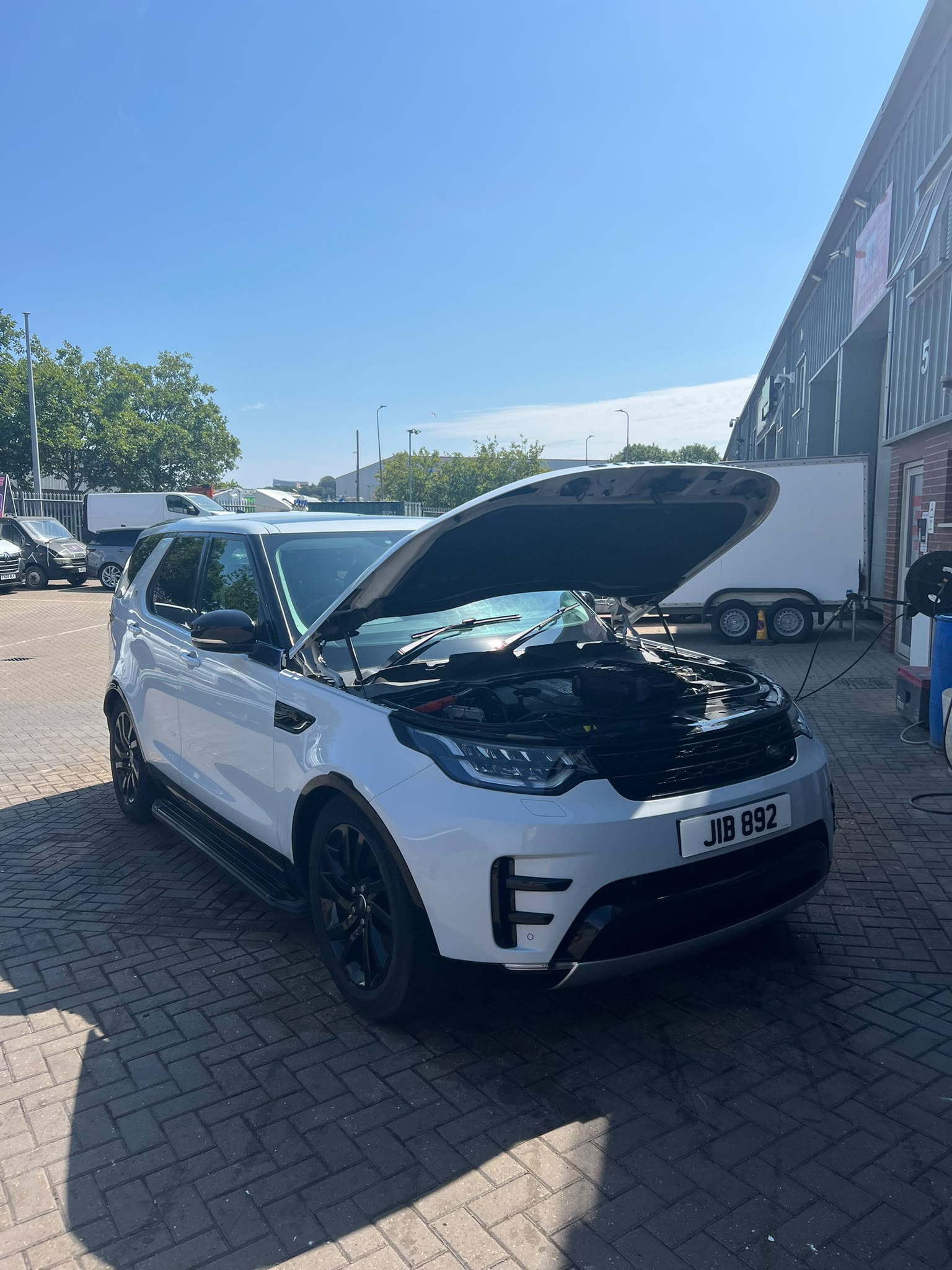
Between £1,200 and £3,500, and the spread is almost all labour. What moves a car within it is where the chain sits and how much has to come off to get at it. On a BMW N47 the chain is at the back of the engine facing the bulkhead, so reaching it means the engine or the gearbox comes apart. On a front-mounted chain you’re at it once the covers and ancillaries are off.
After that it’s scope: chain only, or chain with tensioner, guides and sprockets, and whether the oil pump chain goes in too. You’ll have the figure and know what it covers before we start. No hidden extras, nothing begins without your say-so, and you’re speaking to the workshop rather than a call centre.
Three come up often enough to name. BMW’s N47 2.0 diesel and the later B47 are the ones owners have usually heard about: chains that wear and sometimes let go, mounted at the back of the engine against the bulkhead, which is the concrete reason the labour on that job is what it is. The 1.6 Prince petrol, the EP6 and THP, sits under Peugeot, Citroen, MINI and BMW badges and is known for chain and tensioner wear. And JLR’s Ingenium.
If yours is one of those, a cold-start rattle is worth having looked at early rather than late. Most of our timing work is Ford, Peugeot and Citroen, but that’s a consequence of one shared design, the belt in oil, rather than a limit on what we take in.
The workshop is a single unit on the Medway City Estate in Rochester, off the A289. We’re not in Sittingbourne and won’t pretend to be. The towns on our doorstep are Rochester, Strood, Chatham, Gillingham and Rainham, with Gravesend drivers coming in off the A2. From Sittingbourne it’s the A249 up to Stockbury, one junction west on the M2, then the A289 in through the Medway Tunnel, or the old road along the A2 through Bapchild, Newington and Rainham when the A249 is stacked up.
If the car won’t start, sits in limp mode or hasn’t moved for months, our own recovery truck comes out for it. Our truck, not a recovery firm booked on your behalf, so there’s nothing for you to organise.
All makes, including older cars a main dealer would rather not have in. And if the chain job comes to more than the car is worth, we’ll tell you that too.

Phone: 01634 510 780
Email: bookings@medwayvehicleservices.
co.uk
Unit 3 Cliffe Yard, Anthonys Way, Medway City Estate, Rochester, Kent, ME2 4DY
WhatsApp us