


If your wet belt is due, showing warning signs, or triggering an oil pressure warning, we would not treat it like a normal cambelt job. A wet belt runs inside the engine oil, and when it starts breaking down, rubber debris can block the oil pump pickup and put the engine at serious risk.
At Medway Vehicle Services in Rochester, we inspect the vehicle first, confirm the engine family, check the belt condition, and look for signs of oil pump pickup blockage before quoting the work. We help drivers from Cranbrook and wider Kent with wet belt-equipped vehicles, depending on engine and year.
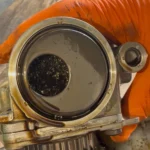
We treat wet belts differently because they run inside the engine oil. A normal cambelt runs dry behind a cover, but a wet belt sits in oil every time the engine runs.
When the oil gets old or contaminated, it can damage the belt surface. The belt then sheds small rubber fragments into the oil.
Those fragments can block the oil pump pickup in the sump. Once that happens, oil pressure drops, and the engine can suffer serious damage before the belt even snaps.
That is why we check the belt condition, oil condition, engine family, and current replacement guidance before giving advice.
We start with diagnosis, not a parts order. The inspection covers a fault-code read, an oil sample look, and a visual check of the belt, where the design allows it without major dismantling. We confirm the engine family and the latest published replacement interval before we recommend anything. If the inspection comes back clean and the interval isn’t due, we tell you so and book you in to come back.
If the belt needs replacing, we agree on the scope before any work starts: the belt, the tensioners and idler pulleys, the water pump, where it’s part of the same job, and an inspection of the oil pump pickup.
The pickup work matters more than people realise. Removing the sump to clean or replace the pickup is the step that gets skipped on cheaper jobs, and it’s the most common reason a wet-belt change fails afterwards. We include pickup inspection in the repair discussion when the vehicle needs it.
These are the signs we tell drivers to take seriously:
The wet belt itself.
The oil-pump pickup screen.
The engine oil and oil filter.
The timing cover seal.
What we’ll quote for separately if the inspection finds it:
What we’ll quote for separately if the inspection finds it:
We usually see three reasons drivers book a wet belt inspection.
If you are seeing any of these signs, we recommend booking an inspection. If the oil-pressure warning light has appeared, even briefly, we would not keep driving the car. At that point, recovery is safer than risking the engine on the journey in.
Pricing depends on the engine and on what the inspection finds. We quote in writing once we’ve confirmed the engine family, checked the belt and oil, and assessed whether the oil pump pickup needs attention. The quote breaks down the belt kit, the water pump, where it’s the same job, labour, and any oil-pump work needed if the pickup has collected belt material. A flat-rate phone-call quote isn’t honest until we’ve seen the car.
Some signs cross the line from “book it this week” to “don’t drive it in”. An oil-pressure warning, even if it cleared after a few seconds. Visible debris on the dipstick or in the oil filler cap. A new ticking or rattle on cold start that fades as the engine warms up. An engine running rough with timing-related fault codes. In any of those cases, getting the car recovered may be safer than driving with possible oil-pressure issues.
Our workshop is on Medway City Estate in Rochester, Unit 3, Cliffe Yard, Anthony’s Way, Rochester, Kent, ME2 4DY. From Cranbrook, one common route is via the A229 towards Maidstone, then onward towards Medway City Estate. Allow journey time to vary with traffic, especially around Maidstone and Medway.
Cranbrook itself doesn’t have a railway station. The nearest are Staplehurst and Headcorn on the South Eastern line, both connecting through Tonbridge to Strood for Cranbrook. Most drivers find the simpler option is to leave the car with us, take a lift home, and we’ll call when the work is signed off. The rail option is there if it suits the day better.
We open Monday to Friday, 8 am to 6 pm, and Saturday and Sunday, 8 am to 3 pm. A Saturday morning drop-off is on the table; most diagnoses and parts work happen during the week, so a weekend drop usually means a midweek collection.
No. A normal cambelt runs dry in a sealed housing. A wet belt runs in the engine oil, and the failure mode is different, oil-driven degradation rather than age-driven crack and snap. The work covers different parts and almost always involves removing the sump to clean the oil pump pickup. We treat it as its own job, not a variant of a cambelt change.
The design appears across several modern petrol and diesel families from the early 2010s onwards. Rather than guess, send us your registration, and we'll confirm whether your specific engine is in the wet-belt family before you book.
If the oil pressure light is on and steady, no. Park up safely and ring us. A wet belt that's already shedding can take the oil pump pickup with it on a longer drive, and that's the difference between a belt job and an engine. We can talk you through recovery options when you call.
No. Wet-belt designs aren't unique to Ford, and we cover all makes for servicing, repairs, and diagnostics from our Rochester workshop. The Ford EcoBoost and EcoBlue engines are the ones we get asked about most often because they're the ones drivers have read about, but the inspection-led approach is the same regardless of the badge.
The service book, if you have it, the registration documents, and a working phone number we can reach you on during the day. If you've had any recent diagnostic codes or warning lights, mention them when you book. The more we know going in, the tighter the inspection focus and the quicker the quote back.
We confirm a hand-back time at the booking, after we've checked the engine spec and what's likely involved. Wet belt jobs are labour-led rather than parts-led, so the time depends on the engine layout more than the parts list.
Possibly. The wet belt design has been used across several manufacturers' engine families since the early 2010s, and it isn't always in the marketing brochure. Give us the registration when you call, and we'll check what's in your engine before we book anything in.
The work is covered by the parts supplier's warranty and our own labour standards. Both sit on the invoice, in writing, so there's no ambiguity later. The original manufacturer's warranty isn't ours to extend.

Phone: 01634 510 780
Email: bookings@medwayvehicleservices.
co.uk
Unit 3 Cliffe Yard, Anthonys Way, Medway City Estate, Rochester, Kent, ME2 4DY
WhatsApp us
