


If your car is showing an oil pressure warning, rattling on start-up, or you have been told the wet belt may be due, we know it can be worrying. A worn wet belt can shed rubber into the engine oil, restrict oil flow, and put the engine at risk.
At Medway Vehicle Services, we help Dartford drivers get the issue checked early. We confirm whether your engine uses a wet belt, explain the condition clearly, and advise you before any replacement is booked.
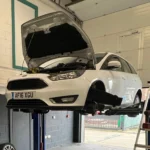
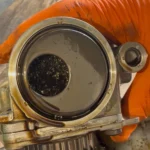
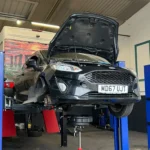
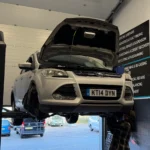
If you notice any of these signs, don’t wait till your belt goes. Call Medway Vehicle Services and we can get it resolved as soon as possible.
Engine Warning Light On
Low Oil Pressure Warning
Rattling or Unusual Engine Noise
Poor Performance or Misfiring
Service History Shows It’s Due
When we inspect a timing belt, we look at how that specific engine is designed. A traditional timing belt usually runs dry on the outside of the engine and is replaced at the mileage interval set by the manufacturer. A wet belt sits inside the engine and runs in oil. On some engines, it can also be linked to the oil pump arrangement.
When wet belt material starts to break down, small fragments can move through the lubrication system. In some cases, the first warning is low oil pressure rather than belt noise.
Wet belt designs appear on small petrol and diesel engines from several major manufacturers, but whether your car has one depends on the exact engine variant. We can check this before advising on the next step.
Many wet-belt checks involve certain post-2012 Ford engines, including some 1.0 EcoBoost petrol engines, some EcoBlue diesels, and Transit or Transit Custom variants from the same era. In most cases, these use a wet belt rather than a dry timing belt or timing chain.
The wider Ford petrol and diesel range from that period can also fall into scope, so we don’t guess from the model name alone. We check the registration and engine details and confirm whether your car uses a wet belt before anything is booked in. As a simple guide, if your Ford has EcoBoost or EcoBlue in the engine name, it is worth asking us to confirm the exact engine before booking.
Wet belts almost never give a clean warning before they fail. The shed rubber from the belt can block the oil pickup pipe, reduce oil pressure, and lead to wider engine damage. The signs to act on, in order of how often we see them as the trigger for a booking:
Some wet-belt problems are reported before the published service interval, so it is safer to confirm the latest guidance for your exact engine rather than relying on the handbook alone.
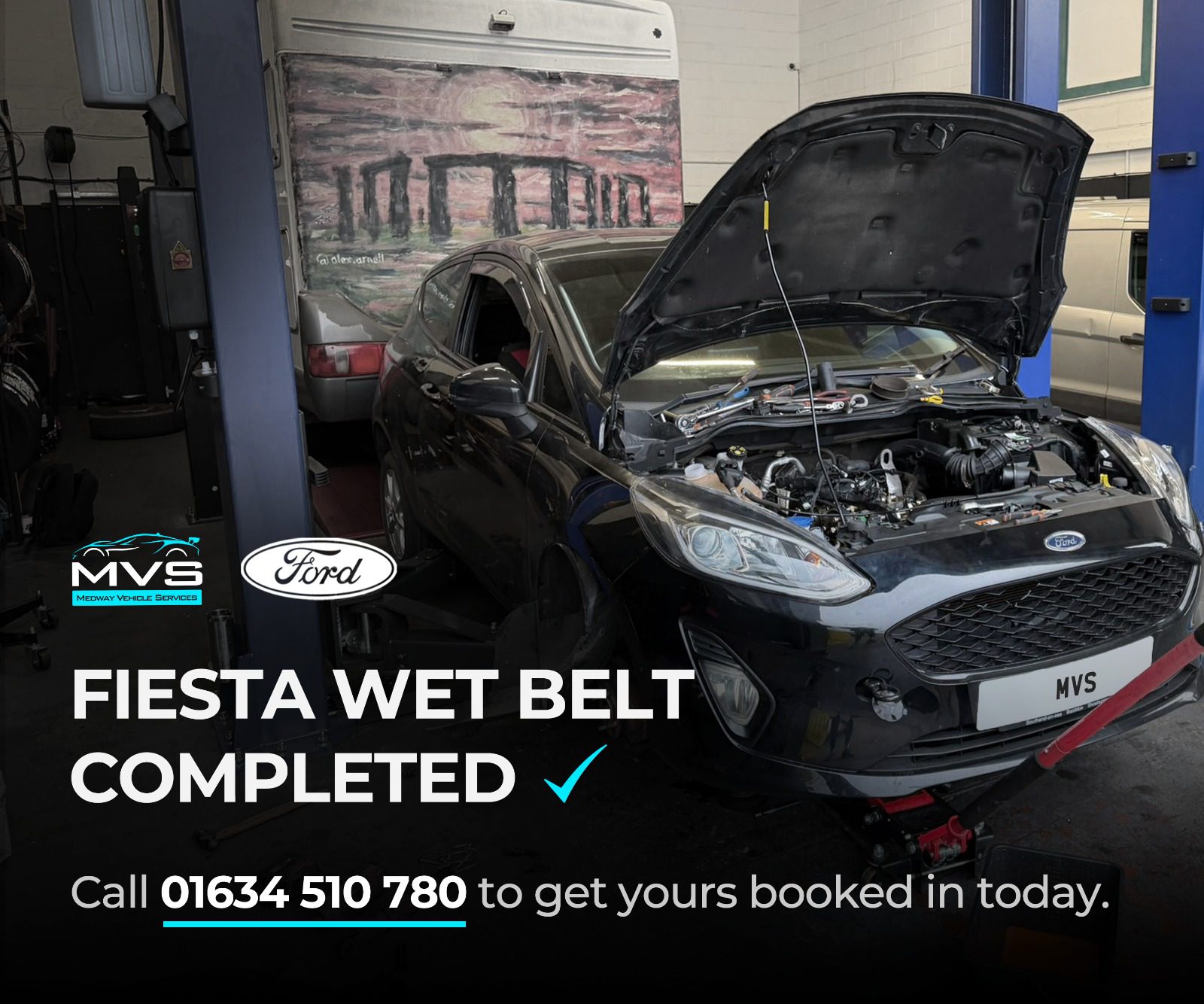
When a wet belt fails completely, we usually see it take the engine with it. The belt strips, the valves, and pistons collide, and the job changes from a planned belt replacement into an engine rebuild, replacement engine, or, in some cases, a write-off.
Even before total failure, we often find the shed rubber has started blocking the oil pickup. Once that happens, the engine can lose oil pressure and start damaging bearings. On diesels, we also see knock-on damage to the high-pressure fuel pump.
That’s why we’d much rather inspect the car early and quote you for a planned wet belt replacement than see it arrive later on a recovery truck with engine damage that could have been avoided.
A wet belt replacement is not a quick job, so we check the car properly before confirming the work. We listen to cold where possible, run an initial diagnostic check, and inspect further where access allows.
If the job goes ahead, we replace the wet belt and the related parts needed for that engine, such as the tensioner, oil pump drive where fitted, water pump where required, and seals. We also inspect and clean the oil pickup when needed.
If we find signs of oil contamination, timing issues, or possible internal damage, we stop and call you before going any further. We won’t carry on and surprise you with a bigger bill at hand-back.
For wet belts specifically, we stick to genuine Ford kits or to the OE supplier’s branded equivalent. The cheaper aftermarket kits on the market use a belt material that doesn’t tolerate the oil bath the same way, and the failure pattern we see on returns confirms it.
If budget is the deciding factor, we’ll explain the available parts options clearly and flag any risk before you make a decision. The whole reason for doing this job is to get the next 60,000 miles back, and a cheaper belt undermines that on day one.
Wet belt replacement pricing depends on the engine, the kit specification, and what we find when the sump comes off. We quote in writing after the cold-start inspection, with the parts list itemised so you can see what’s genuine, what’s OE-equivalent, and what’s labour.
For the 1.0 EcoBoost and the 1.5 EcoBlue, the all-in figure typically falls inside the published UK market band for a genuine-parts job; we won’t quote a tempting headline number that doesn’t include the oil pickup or the water pump, because skipping those is what causes the repeat-fail stories.
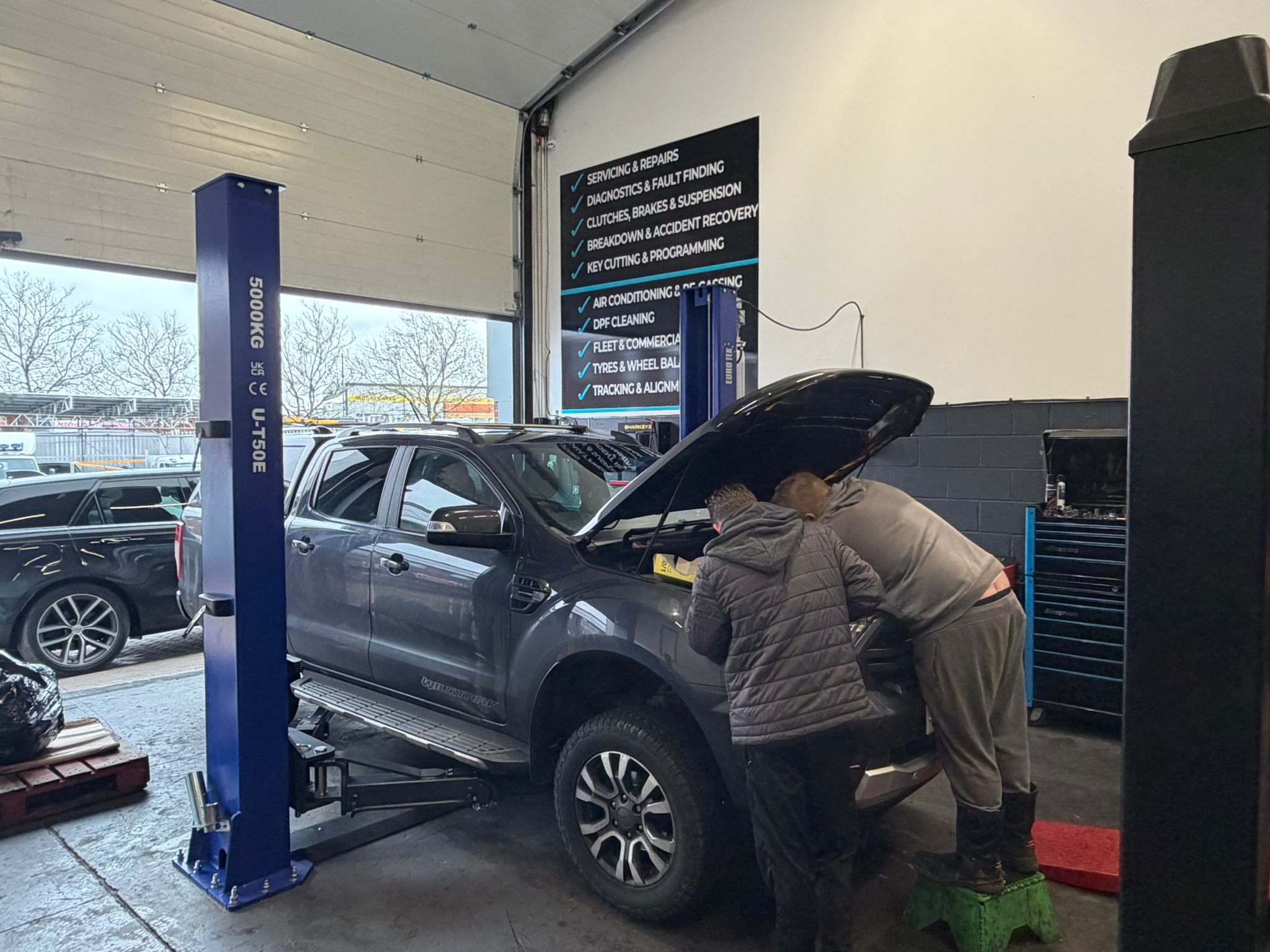
We’re based at our Rochester workshop, roughly half an hour from Dartford on the A2 outside of rush hour. It can take longer on a Friday afternoon or around the Bluewater school-run surge, so we always suggest planning the drop-off around the safest and easiest time to travel.
Most of our Dartford customers either leave the car with us the night before using the keysafe, or come down first thing and head back by train from Rochester station. The station is about a fifteen-minute walk from us, with direct services back towards Dartford via Strood and Greenhithe. If you’re coming in from elsewhere in the Borough, the journey time is usually much the same.
If the car already has a misfire or a heavy rattle and you’re not comfortable driving it down the A2, speak to us before you set off. We’d rather help you arrange recovery into the workshop than risk the belt letting go on the dual carriageway.
Probably yes, if it's between 60,000 and 100,000 miles. The 1.0 EcoBoost in Fiesta, Focus, Puma, EcoSport, and B-Max is the engine that triggered the BBC Watchdog coverage and the bulk of the failures we see. A quiet engine doesn't rule the belt out; most of the cars we replace belts on came in sounding entirely normal.
Same job, slightly different parts list. Transit Custom, Transit Connect, and Ranger 2.0 EcoBlue all use a wet belt, and all develop similar symptoms. For working vans, the mileage usually arrives sooner than the time interval, so we ask about typical weekly miles when we quote.
In most cases, yes. A cold-start rattle that settles after a minute usually means the belt is degrading rather than gone. If the rattle stays on while the engine's warm, or you've got an engine management light along with it, ring us first and we'll talk through whether a recovery makes more sense.
Wet belt work is specialist enough that not every garage takes it on regularly. A 30 to 60-minute drive to a workshop that handles the design routinely is usually less hassle than booking somewhere unfamiliar with the job.
Plan for the working day, with us holding the car overnight if anything we find on the sump-off inspection needs a parts order. If we can complete the job the same day, we will, and we'll text you a hand-back time after the cold-start check that morning rather than at booking-in.
For cars outside the manufacturer's warranty window, the answer is no. Independent specialist work should not automatically affect warranty rights when the work is carried out to the required specification and records are kept. For cars still inside warranty, we'll tell you honestly whether the dealership is the cheaper call on this specific job.

Phone: 01634 510 780
Email: bookings@medwayvehicleservices.
co.uk
Unit 3 Cliffe Yard, Anthonys Way, Medway City Estate, Rochester, Kent, ME2 4DY
WhatsApp us