




If your wet belt is due, showing warning signs, or triggering an oil pressure light, do not treat it like a normal timing belt job. A wet belt runs inside the engine oil, and when it breaks down, rubber debris can block the oil pump pickup and put the engine at serious risk.
At Medway Vehicle Services in Rochester, we inspect the vehicle, confirm the right wet belt repair, and quote the work before any major repair is approved. We work with drivers from Birchington, Thanet, and wider Kent on Ford wet belt vehicles and other wet belt-equipped models, depending on engine and year.
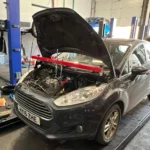
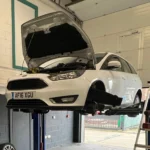
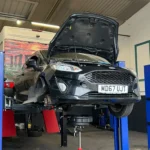
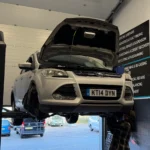
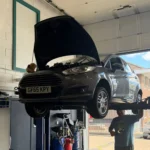
Either way, you’re in the right place. A wet belt replacement is a specific job, and the right scope depends on the engine, access, inspection findings, and parts required. We do all of that under one bay number, oil pump pickup included.
We see plenty of cars now that use a timing belt running inside the engine, bathed in oil, rather than the older dry belt design behind a plastic cover. The “wet” part is literal. The belt is soaked in engine oil, which helps keep it cool and lubricated throughout its life.
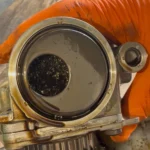
The trade-off is that the belt material breaks down over time. Fibres and small pieces of rubber can shed into the oil, and the part we pay close attention to is the oil pump pickup. Once that pickup starts to block, oil pressure drops, and the engine can be at risk in minutes rather than miles.
We see this design on specific engine families from Ford, Peugeot, Citroën, Vauxhall, and others, especially from the early 2010s onwards. It was mainly used for tighter packaging and lower friction at the timing end of the engine.
These are the signs we tell drivers to take seriously:
A rattle on cold start, especially the first start of the day, that fades as the oil warms up
An oil pressure warning light that comes on briefly, especially at startup or low engine speed
A scheduled service interval is reached, often around 100,000 miles or 10 years on these engines, whichever comes first
Oil that looks darker than expected, or a dipstick showing visible flecks of rubber or fibre
If your car is already past the manufacturer’s interval and still running cleanly, we would not treat that as proof it is safe. The belt’s condition matters more than the symptoms. Quiet does not always mean healthy.
Wet belt jobs are labour-led rather than parts-led. The engine has to come down to the bottom end on most of these designs to get clean access to the belt and the oil pump pickup.
When the car comes in, we strip the front of the engine, drop the sump, replace the belt and the pickup pipe at the same time (separating those two jobs is a false economy on this design), fit a fresh oil filter and the correct oil grade for the engine, and run a pressure check before the bay door opens again.
If we open the engine up and find the tensioner, the seals around the front cover, or any other component that shows a reason to do extra work, we will ring you before adding it to the bill. That’s the part of the job we won’t do without your sign-off.
Wet belt replacement isn’t a fixed-price service. It depends on the engine, the year, and what we find when we get inside the timing case. Some engines are designed for serviceability, and the labour comes in lower; others need more components removed to reach the belt, and the labour ends up being the bigger half of the bill.
We quote in writing once we have your registration and have gone through the booking. The quote covers belt, oil pump pickup, oil and filter, and the labour to get all of it in and back out, and we name the parts we’d use rather than describing them as “OEM-quality” without being specific.
If your car is showing oil pressure warnings, even briefly at idle, we would not treat the wet belt as a routine service item anymore. At that point, it becomes a condition we need to take seriously. Continuing to drive with a degraded wet belt can risk engine failure that cannot be reversed, and by then, the repair is often about the engine, not just the belt.
Even if the car is quiet and running cleanly, we would still be cautious if the manufacturer’s interval has passed. We would rather book the car in early and inspect it properly than deal with engine damage later.
The workshop is on the Medway City Estate in Rochester, off Anthony’s Way at ME2 4DY. From Birchington, the route runs the Thanet Way (A299) west to Brenley Corner, then the M2 across to junction 1 and through Strood to the estate.
Some owners drop the car in the morning and get the train back from Strood, which runs through Faversham and Margate to Birchington-on-Sea on the same line. Others arrange recovery if the car isn’t safe to drive. We can talk through the practical side when you call to book.
Common Ford wet belt enquiries include Fiesta, Focus, Transit, and other EcoBoost or EcoBlue engines, depending on model, engine, and year. Some previous-generation PSA/Stellantis 1.2 PureTech engines used in Peugeot, Citroën, and Vauxhall models are another example, depending on engine and year. Some VW Group engines use timing belts or chains, but they should not be assumed to be wet belt engines without checking the exact engine code. If you're not sure, give us your registration when you call, and we'll confirm what's in your engine.
No. A normal cambelt runs dry behind a plastic cover, and the job is mostly about access to the belt itself. A wet belt sits inside the engine in oil, and the work extends to the oil pump pickup, the sump, and the seals around the front cover. The labour profile is different, and the parts list is different.
No. The engine is engineered around the belt design. Chain conversions are not a real option for these engines, and any garage offering one is selling something the engineering doesn't support.
Tell us when you book. The longer the engine has run with low or intermittent oil pressure, the more likely it is that the inspection turns up wear elsewhere. Honesty about what the car has been doing helps us quote the first time properly and avoids bad surprises in the workshop.
Stop driving and arrange for recovery to the workshop. Continuing to run an engine with a contaminated oil pickup risks the kind of damage that ends the engine, and at that point, the wet belt isn't the only concern.
We confirm a hand-back time at the booking, after we've checked the engine spec and what's likely involved. Wet belt jobs are labour-led rather than parts-led, so the time depends on the engine layout more than the parts list.
Possibly. The wet belt design has been used across several manufacturers' engine families since the early 2010s, and it isn't always in the marketing brochure. Give us the registration when you call, and we'll check what's in your engine before we book anything in.
The work is covered by the parts supplier's warranty and our own labour standards. Both sit on the invoice, in writing, so there's no ambiguity later. The original manufacturer's warranty isn't ours to extend.

Phone: 01634 510 780
Email: bookings@medwayvehicleservices.
co.uk
Unit 3 Cliffe Yard, Anthonys Way, Medway City Estate, Rochester, Kent, ME2 4DY
WhatsApp us