

If your car has a wet belt engine, we would not leave it until the oil pressure light stays on or the engine starts rattling. Wet belts run inside the engine oil, so when the belt starts to break down, rubber debris can block the oil pump pickup and starve the engine of oil.
At Medway Vehicle Services, we treat wet belt replacement as an inspection-led job. We check the engine type, oil condition, belt warning signs, and oil-pump pickup before setting the final price, so you know what the car actually needs before we start the work.
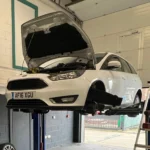
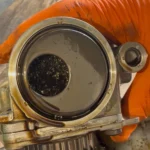
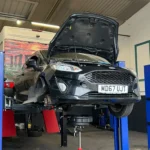
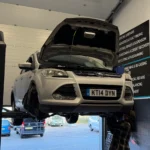
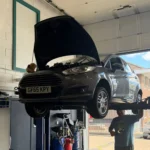
We usually see wet belt cars when something has already changed. The oil pressure light has flickered on a hot day. The engine has started making a faint rattle on cold start. Or another garage has mentioned the wet belt during a service, but left the driver without a clear next step.
When we inspect these engines, we are not just looking at the belt. A wet belt runs inside the engine oil, so as the rubber breaks down, small particles can move through the oil system and block the pickup screen on the oil pump. Once that pickup starts to block, oil pressure drops, and the warning light becomes a serious sign.
We would not treat a flickering oil light as something to ignore. The gap between an early warning and major engine damage can be shorter than most drivers expect. That is why we check the belt, oil condition, and oil-pump pickup before we quote the job.
The job isn’t a like-for-like cambelt swap. The wet belt sits behind the timing cover, inside the engine. Depending on the engine, the work can involve stripping the front of the engine, dropping the sump, replacing the belt and related oil-system components, refreshing the oil and filter, and refitting everything correctly. We check for oil contamination during the strip-down, so the replacement is based on the condition of the engine, not just the belt.
These are the signs we tell drivers to take seriously:
The wet belt itself.
The oil-pump pickup screen.
The engine oil and oil filter.
The timing cover seal.
What we’ll quote for separately if the inspection finds it:
What we’ll quote for separately if the inspection finds it:
Larkfield sits on the A20, about a fifteen-mile run from us. A common route is the M20 east to junction 6, then the A229 north towards Medway City Estate. In normal traffic, the drive runs roughly thirty minutes; the morning rush off the M20 adds another ten or fifteen.
If the car’s still drivable, with the oil pressure light off and no rattle, driving it in may be suitable. If the light’s on or the engine’s making metallic noises, ring us before you set off. We can talk through whether it will make the journey or whether recovery is the safer call from where you are.
If the inspection shows the pump itself is failing, not just the pickup, fitting a new belt over it isn’t a solution. The new belt runs on starvation pressure from day one and breaks down faster than the old one did. We ring you with a separate quote for the pump before any work runs. You sign it off, or you don’t. Either way, the job pauses until you’ve decided.
Pricing depends on the engine, on what the inspection finds, and on whether the oil pump needs replacing alongside the belt. We quote in writing after the inspection, not over the phone. Where possible, we explain labour and parts before work is approved and call before any additional work is carried out.
Forum prices and dealer estimates aren’t a useful guide to what your specific car needs. The belt itself is one cost. The pickup is another. The inspection is the only honest way to see whether the pump itself is gone too.
Common Ford wet belt enquiries include Fiesta, Focus, Transit, and other EcoBoost or EcoBlue engines, depending on model, engine, and year. Some previous-generation PSA/Stellantis 1.2 PureTech engines used in Peugeot, Citroën, and Vauxhall models are another example, depending on engine and year. Some VW Group engines use timing belts or chains, but they should not be assumed to be wet belt engines without checking the exact engine code. If you're not sure, give us your registration when you call, and we'll confirm what's in your engine.
No. A normal cambelt runs dry behind a plastic cover, and the job is mostly about access to the belt itself. A wet belt sits inside the engine in oil, and the work extends to the oil pump pickup, the sump, and the seals around the front cover. The labour profile is different, and the parts list is different.
No. The engine is engineered around the belt design. Chain conversions are not a real option for these engines, and any garage offering one is selling something the engineering doesn't support.
Tell us when you book. The longer the engine has run with low or intermittent oil pressure, the more likely it is that the inspection turns up wear elsewhere. Honesty about what the car has been doing helps us quote the first time properly and avoids bad surprises in the workshop.
Stop driving and arrange for recovery to the workshop. Continuing to run an engine with a contaminated oil pickup risks the kind of damage that ends the engine, and at that point, the wet belt isn't the only concern.
We confirm a hand-back time at the booking, after we've checked the engine spec and what's likely involved. Wet belt jobs are labour-led rather than parts-led, so the time depends on the engine layout more than the parts list.
Possibly. The wet belt design has been used across several manufacturers' engine families since the early 2010s, and it isn't always in the marketing brochure. Give us the registration when you call, and we'll check what's in your engine before we book anything in.
The work is covered by the parts supplier's warranty and our own labour standards. Both sit on the invoice, in writing, so there's no ambiguity later. The original manufacturer's warranty isn't ours to extend.

Phone: 01634 510 780
Email: bookings@medwayvehicleservices.
co.uk
Unit 3 Cliffe Yard, Anthonys Way, Medway City Estate, Rochester, Kent, ME2 4DY
WhatsApp us
