

When a wet belt starts to fail, we know the first warning is often an oil pressure light, a cold-start rattle, oil contamination, or degraded oil rather than the belt snapping straight away. For Paddock Wood drivers, leaving these signs too long can lead to blocked oil flow, pickup restriction, and a much bigger repair.
At Medway Vehicle Services, we inspect the wet belt, tensioner, guides, oil condition, oil-pump pickup, sump condition, and oil-pressure risks before giving a quote. This helps us show you what is really happening inside the engine before any repair work starts.
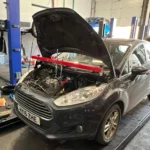
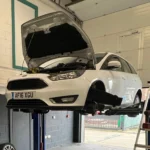
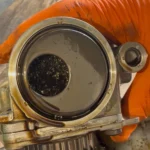
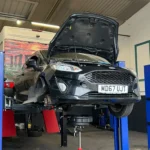
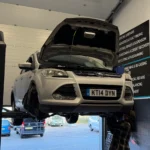
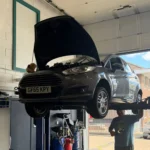
A wet belt runs inside the engine in oil, not dry behind a cover. Manufacturers use it because it can be quieter and easier to package in some smaller engines. The downside is that belt life depends heavily on oil quality.
As oil ages, the belt can break down, shed fragments into the sump, and block the oil-pump pickup. When the oil-pressure warning appears, the pickup may already be restricted. That is why we do not replace the belt without checking the pickup. A proper wet belt job has two concerns: the belt and the oil system.
Many wet belt problems can show through the oil system before the belt fails fully. We look for early signs such as:
Oil-pressure light or low-oil-pressure warning.
Cold-start rattle or tapping that settles after the engine starts.
Oil contamination, sludge, or debris found during checks.
Visible contamination or sludge in the engine oil.
Oil service or warning messages linked to poor oil condition.
One sign is worth a call. Two signs usually mean we need to inspect it. The longer the oil-pressure warning runs, the higher the chance of oil-system restriction, engine damage, and a bigger repair.
Where the engine design requires it, we strip the front of the engine to get clean access to the belt, the tensioner, the guides, and related oil-system components at the same visit. The aim is to deal with the belt and oil system risk together. Replacing the belt without inspecting the pickup leaves the second failure point untouched.
The work can cover the belt itself, the tensioner and guides as a set, a full oil and filter change with the correct specification oil, and an inspection of the oil-pump pickup with the sump off. Where the pickup shows belt debris, we clean or replace it before refit. Where it’s clean, we record the finding so the next service has a clear baseline.
We finish with final checks and, where appropriate, a road test before the hand-back. These checks can include cold start, warm running, road-test behaviour, and settled idle on return. The car is checked before it leaves the workshop.
A new belt should not be fitted while a restricted pickup is left unresolved. The new belt needs a clean oil flow, so the pickup must be able to feed the oil system properly. If the pickup is half-blocked with material from the old belt, the new belt sees compromised lubrication from day one.
We recommend inspection before giving a final wet belt quote. We do not give a final wet belt quote over the phone from symptoms alone. And we may recommend pickup or sump cleaning where inspection shows contamination. That approach applies whether you are local to Rochester or travelling from Paddock Wood.
Paddock Wood is about 20 miles from our Rochester workshop. A route planner may take you via the A228, M20, and A229, depending on traffic. Journey times vary with traffic, so check a live route before setting off.
Before bringing the car in, consider the oil-pressure warning:
Call us
before driving if you have had an oil-pressure warning or abnormal engine noise.
Recover it
if the oil-pressure light stays on. Do not risk the A228. Call us first, and we’ll advise whether a flatbed is needed.
If you want to leave the car overnight, the train from Paddock Wood to Strood takes around 43 to 47 minutes on direct services, and Strood station is a short taxi ride from us. Ring before setting off so we know to expect you.
Pricing depends on the engine, access, parts used, whether the vehicle still runs, any damage found, and any oil-system contamination. A straightforward job with no extra damage or contamination is usually more cost-effective. A job that finds debris at the pickup and needs the sump dropping and cleaning sits higher.
We quote in writing after the inspection in the morning, not over the phone. The quote covers parts, labour, the oil and filter, and any pickup-related work before repair starts. If the inspection finds the job is bigger than the original estimate, we phone for sign-off before any extra labour starts.
The inspection itself helps you understand the repair before approving the work. We inspect the belt and oil system where access allows, explain the findings, and provide a quote before repair work starts. If the inspection suggests a smaller repair, the quote reflects that. If it looks worse, the photographs show why.
If you decide not to proceed with us at that point, we will explain the safe next step and any inspection charges before further work continues. You can decide after the inspection findings are explained.
The wet belt design appears across certain Ford engines, including some 1.0 EcoBoost and 1.5 EcoBlue engines, and some PSA/Stellantis PureTech engines. If you give us the registration plate, we'll confirm whether your specific engine uses one.
Only as far as needed to stop safely. The light may mean the engine is not getting the oil pressure it needs. Continued driving with the light on risks damage that turns a wet belt replacement into a wet belt plus engine job. Phone us before you drive any distance with the light on.
Inspection time depends on the engine and the access required. Many wet belt replacements take around 6 to 10 hours, depending on the vehicle and engine. If extra oil-system cleaning is needed, we will confirm the revised timeline after inspection. We agree on the timeline with you after the inspection, not before, because the strip-down is what tells us which version of the job we're doing.
No. Ford wet belts are commonly searched for, but wet belt designs also appear in some non-Ford engines. The inspection approach depends on the specific engine, symptoms, and manufacturer information. The differences are in the parts supply and the torque settings, which we cross-reference against the manufacturer's specification for the engine in front of us.
On cars still inside the manufacturer's warranty window, the work is recorded against the service history with OE-spec parts and the correct oil grade. Block-exemption rules generally protect a customer’s right to use an independent repairer without automatically losing warranty cover, provided the work is carried out correctly, and suitable parts and procedures are used. Keep the invoice and service paperwork with the vehicle records.
Often, yes. An oil-pressure warning should be treated as urgent, so call before driving or booking. Phone with the registration and symptoms so we can advise the safest next step and the earliest suitable inspection. That's a different priority from a planned service-interval booking.

Phone: 01634 510 780
Email: bookings@medwayvehicleservices.
co.uk
Unit 3 Cliffe Yard, Anthonys Way, Medway City Estate, Rochester, Kent, ME2 4DY
WhatsApp us
